
RFID OPERATING ENVIRONMENTS
Start with the environment where items move, change hands, or need verification
Explore industry pages organized around operating moments, physical constraints, hardware roles, customer-system boundaries and pilot acceptance.
Start where identity changes an operational decision.
Material, motion and adjacent zones shape the read point.
Customer platforms own records and workflow decisions.
Measure required reads, unwanted reads and exceptions.
INDUSTRIES
Different environments create different RFID design constraints.
Industry pages explain where RFID can fit and what must be validated. Solution pages explain how to implement a specific workflow outcome.
Manufacturing & Automotive
WIP, tools, fixtures and production handoffs.
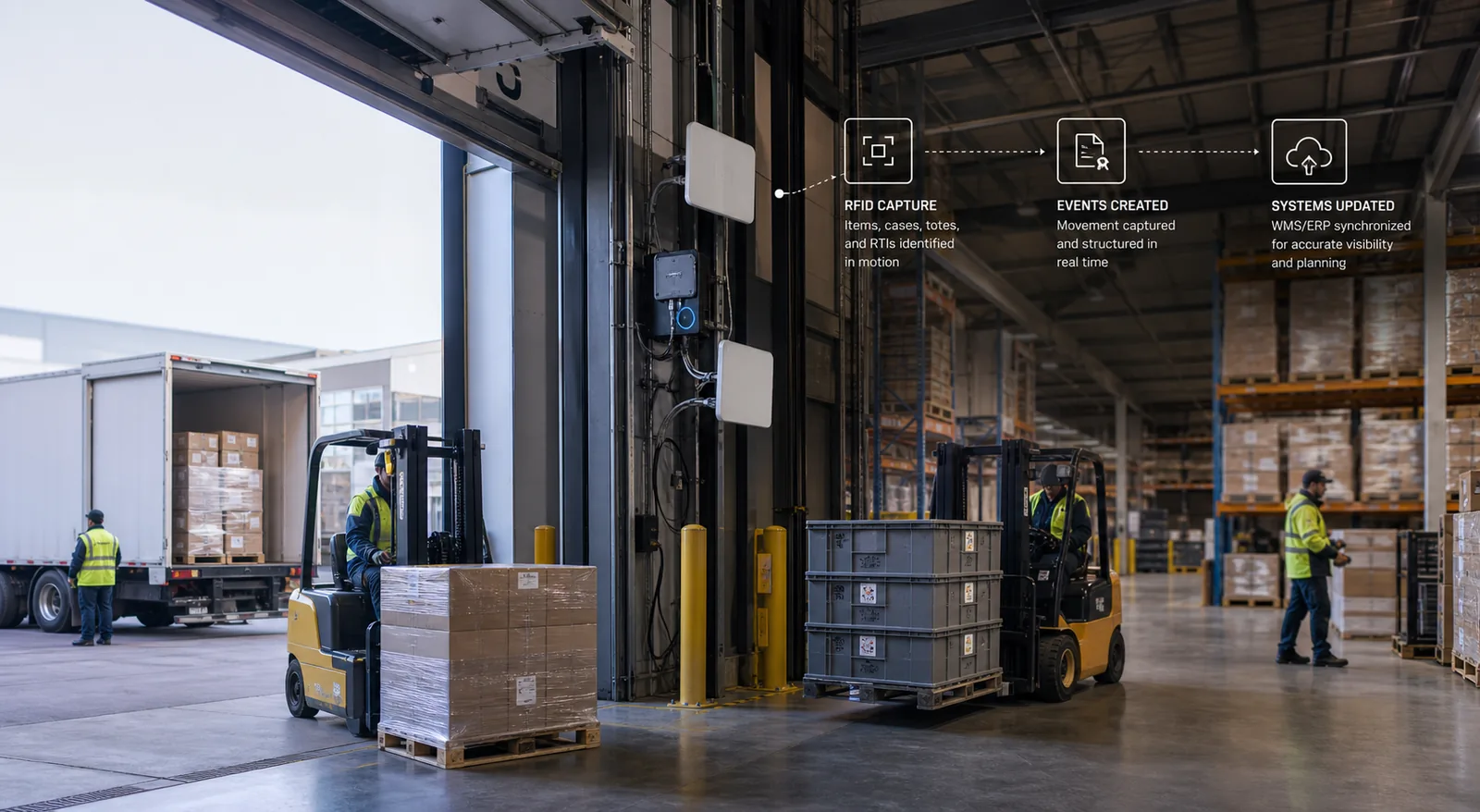
Warehouse & Logistics
Receiving, inventory, staging and outbound verification.
Retail
Source tagging, store inventory and returns.
Healthcare
Assets, supplies, carts and service workflows.
Laundry & Textiles
Issue, collection, wash, sort and clean return.
Libraries
Preparation, inventory, circulation and exits.
Vehicle & Transportation
Access, checkpoints and transport assets.
Airport & Aviation
Baggage, ground assets and controlled handoffs.
CROSS-INDUSTRY WORKFLOWS
The same hardware format can serve different industries, but the event logic changes.
Use the workflow routes to move from an industry context into a more detailed implementation path.
Mobile inventory and search
Assets, stock, tools, books, garments and equipment.
→02Controlled read-point verification
Stations, cabinets, doors, docks, conveyors and gates.
→03Returnable item circulation
Pallets, totes, racks, carts, trailers and reusable textiles.
→04RFID embedded into equipment
Machines, cabinets, kiosks, test stations and OEM systems.
→INDUSTRY VALIDATION
Real operating conditions belong in the pilot—not in a later correction phase.
Use representative objects, movement, people, adjacent zones and system behavior before scaling a design across sites.
Representative object
Material, tag position, orientation and lifecycle.
Real movement
Speed, congestion, handling and operating position.
Adjacent environment
Nearby rooms, lanes, shelves, people and equipment.
Customer response
Transaction, exception, audit and acceptance behavior.
PROJECT REVIEW
Describe the operating environment before requesting hardware.
Share the item, material, movement, read point, required event, regional frequency, host interface, customer system and expected quantity.