
8-Port Android Edge UHF RFID Reader
RLF-8PA 8-Port Android Edge UHF RFID Reader
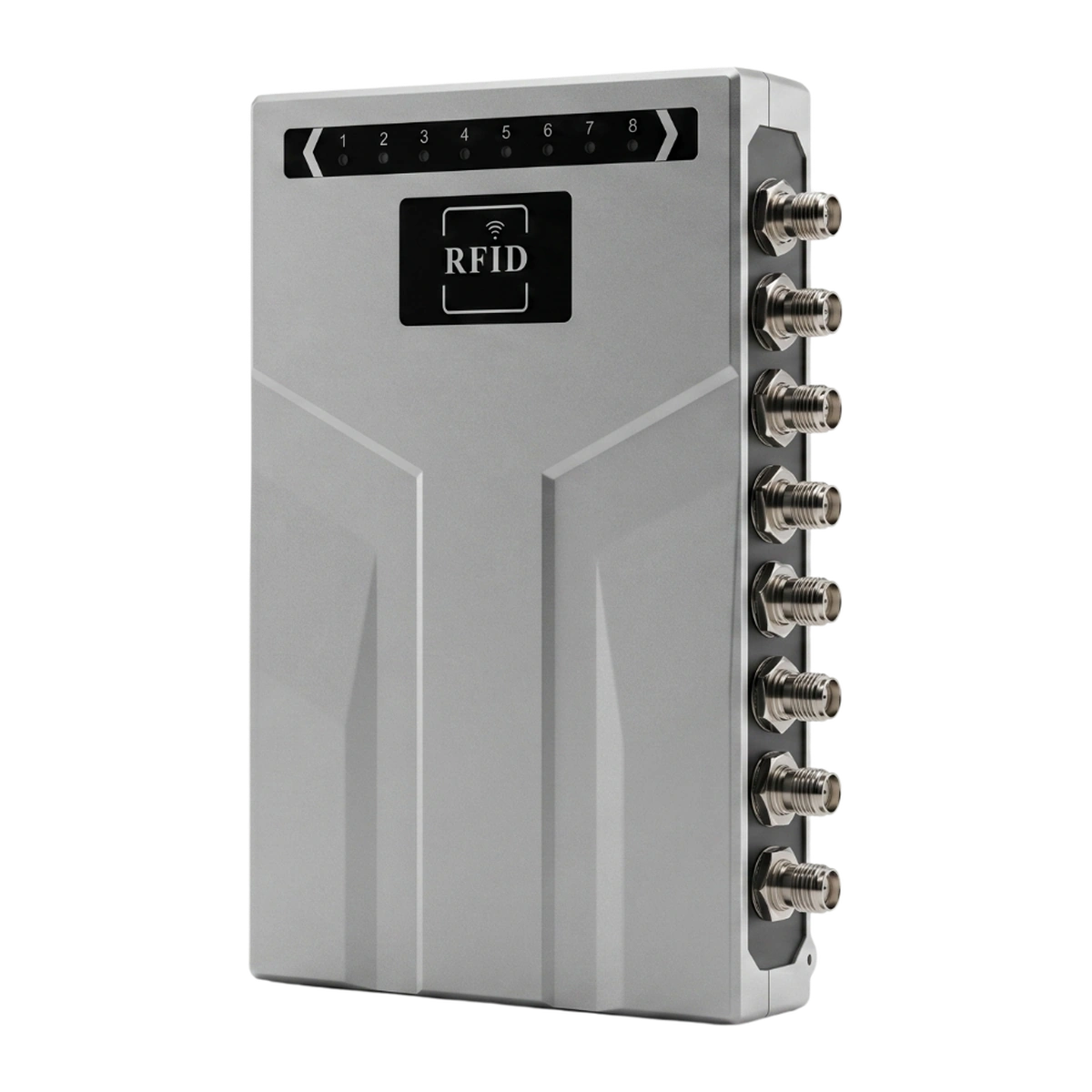
Process RFID events at the read point with built-in middleware, local storage and direct system communication. RLF-8PA connects up to eight external antennas, filters tag data locally, keeps collecting during network interruptions and forwards events through MQTT, HTTP, TCP, UDP, Ethernet or serial communication.


* Tag rate, read distance and event reliability depend on the selected RFID engine, tag population, antenna, cable loss, RF settings, tagged material, orientation, interference, movement speed, edge-rule configuration and operating environment.
Why Use RLF-8PA?
Move filtering, storage and event routing closer to the RFID checkpoint.
Use RLF-8PA when a fixed RFID point must continue working locally, reduce raw-data traffic and communicate directly with industrial or business systems.
Reduce host-side RFID processing
Use built-in middleware for duplicate filtering, direction detection, breakpoint recovery and blacklist or whitelist management before data reaches the business system.
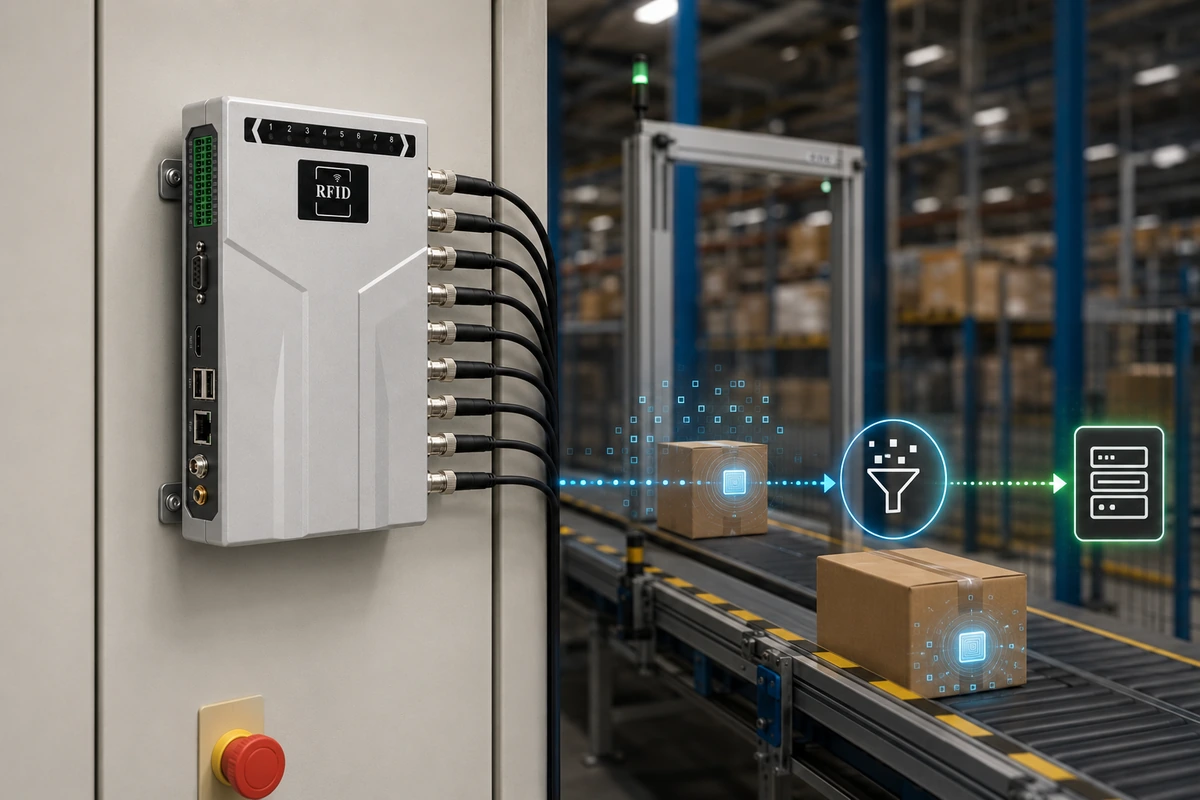
Keep collecting when the network is unavailable
Cache more than one million tag events locally and synchronize stored records after connectivity returns.
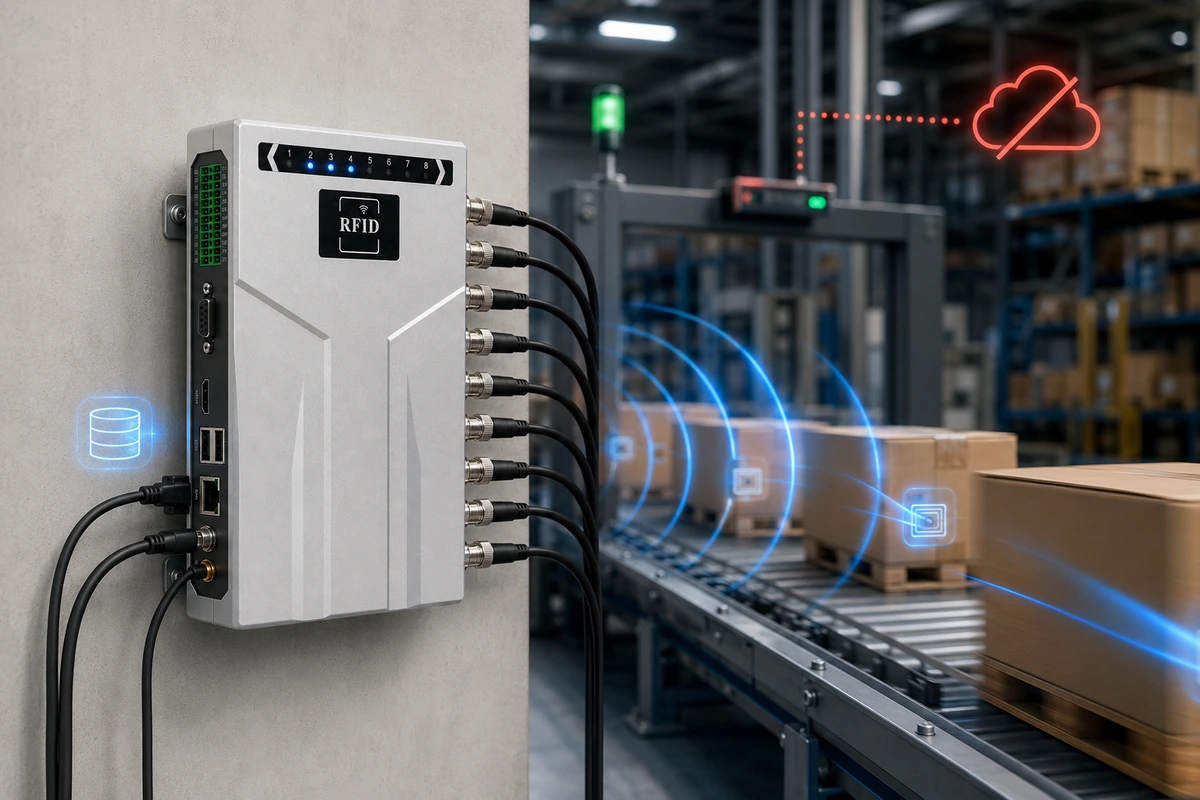

Connect events directly to your system
Send filtered RFID data through MQTT, HTTP, TCP, UDP, Ethernet or serial communication without forcing every deployment through a separate middleware server.
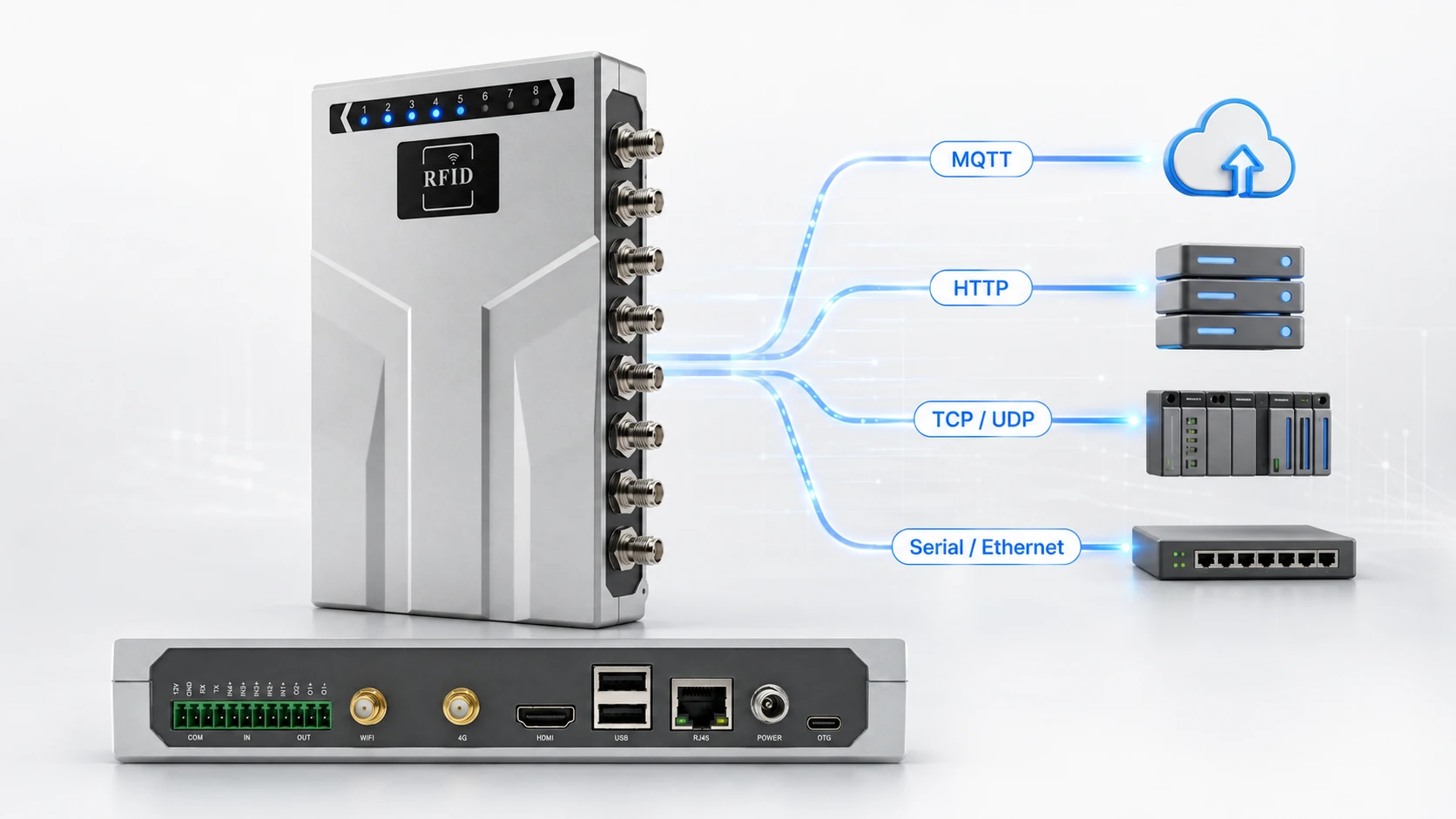
Before / After
From raw-reader dependency to an edge-managed RFID checkpoint
Move repeated filtering, temporary storage and protocol conversion from an always-online host workflow into the reader at the checkpoint.
Host-dependent RFID processing
Five linked actions for each event stream

The checkpoint depends on the host connection and external software completing every processing stage.
Edge-managed RFID event flow
Three stages at the configured checkpoint
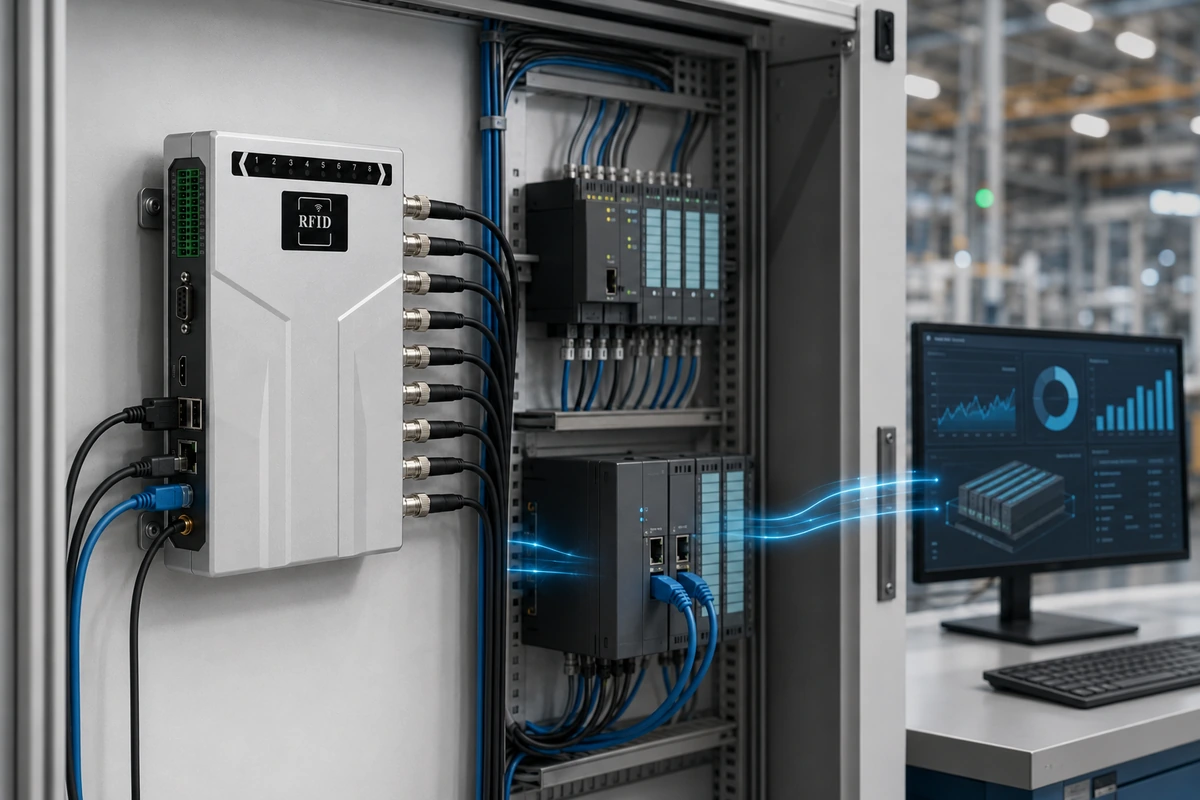
Built-in edge functions can reduce host-side processing, but project ownership for user permissions, MES or WMS transactions, ERP records, alarm escalation, database retention and final business rules remains with the connected application and system design.
Multi-Point Edge RFID Reading
Use eight external antennas with one shared edge-processing platform
Position antennas around receiving points, production stations, asset zones or controlled passages. The reader can apply common filtering, caching and communication rules across the connected antenna configuration.
Connect project-matched antennas and process tag events locally before forwarding data to the host system.
Receiving Point
Capture tagged cartons, pallets, totes or returnable assets and filter duplicate reads before sending the event.
Production Point
Identify work-in-process items, fixtures or carriers and route the configured event into the production workflow.
Asset Movement Point
Use direction and rule-based processing to identify intended or unauthorized tagged-asset movement.
Remote Checkpoint
Continue storing tag events locally when the network is interrupted and synchronize after connectivity returns.
Eight antenna ports do not automatically create eight isolated read zones. Zone separation and direction accuracy depend on antenna type, mounting, spacing, shielding, RF power, cable loss, tag orientation, materials, movement path and site conditions.
Edge System Architecture
Filter, store and route RFID events before they reach the business platform
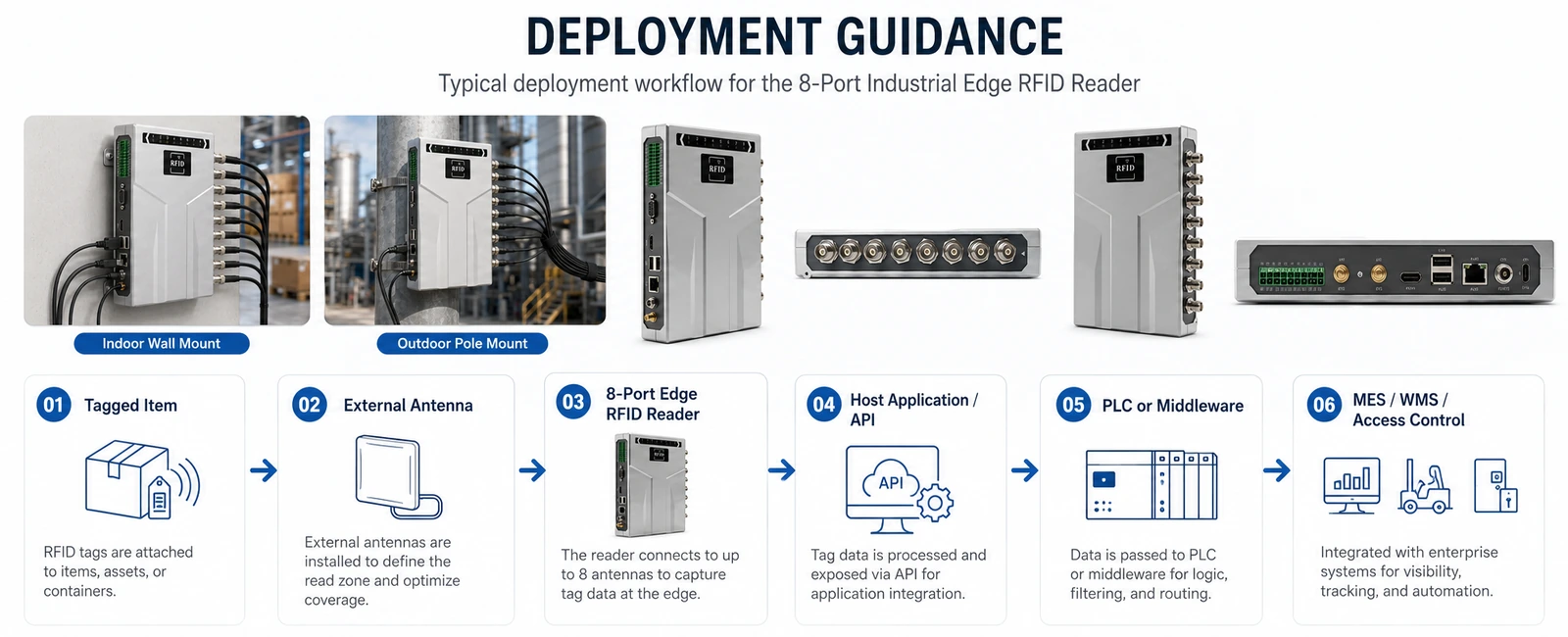
RLF-8PA combines the RFID engine, Android computing platform, built-in middleware, local cache and network protocols in one fixed reader.
Tagged Item
A compatible UHF RFID tag enters the intended antenna coverage area.
External Antenna
The selected antenna and mounting geometry create the project-specific RF zone.
RLF-8PA Reader
The RFID engine captures compatible tag responses from the connected antenna ports.
Built-In Middleware
Local rules can filter duplicates, detect direction and manage approved or blocked tag lists.
Local Cache & Recovery
Tag events can be retained locally and synchronized after the network connection returns.
MQTT / HTTP / Business System
Filtered events are forwarded to the project application, middleware, MES, WMS or cloud service.
Interfaces & Edge Integration
Connect the reader to local applications, networks and control equipment
Review the host interface panel, antenna connections, network options and industrial I/O before defining the edge-integration architecture.
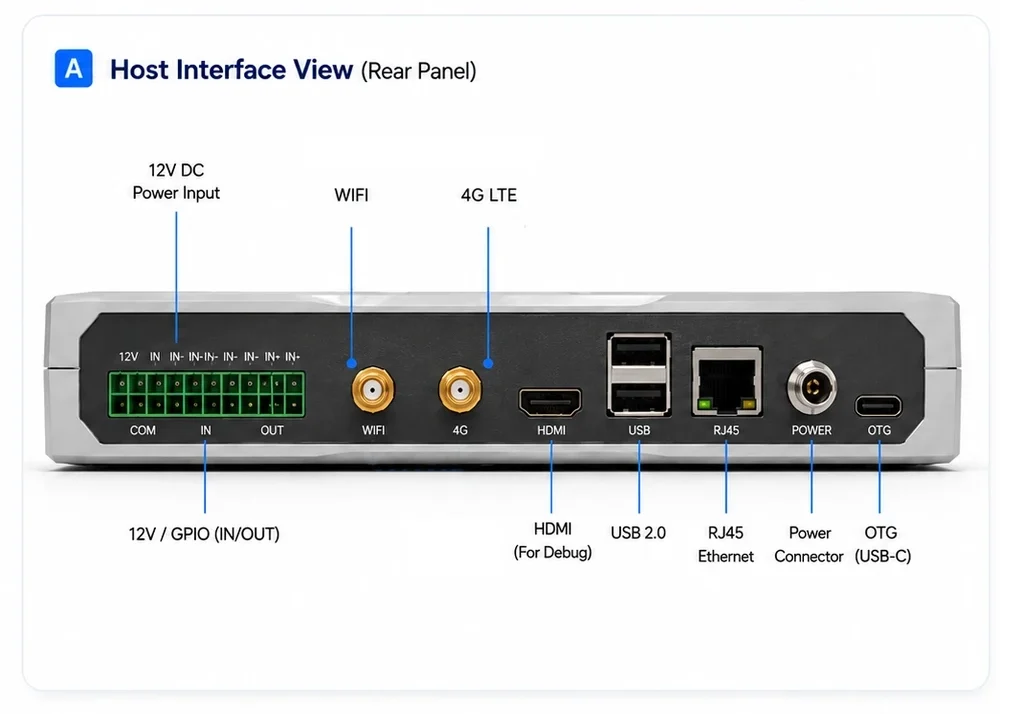
MQTT, HTTP, TCP, UDP and serial
Route filtered RFID events to the selected application, middleware or integration layer.

Android edge application environment
Run approved local applications and supported development packages at the read point.
Ethernet, Wi-Fi and mobile-network options
Connect fixed or remote checkpoints to local, enterprise or cloud infrastructure.

Inputs, relay outputs and serial control
Connect sensors, indicators, alarms and control equipment after final pinout confirmation.
Publication gate: confirm the current Ethernet speed, wireless configuration, relay-output count, RS-485 availability and final I/O pinout before publishing the interface claims.
Supporting Features
Configure the edge reader around the project workflow
Match the RFID engine, local rule set, cache behavior, protocol, network option, antenna design and physical installation to the required business event.
Direction, duplicate and tag-list processing
Apply supported local algorithms for direction detection, duplicate filtering, breakpoint recovery and blacklist or whitelist management.

More than one million cached tag events
Retain RFID events locally during a connection interruption and synchronize them after connectivity returns.

Remote firmware, parameter and health management
Use the supported management environment for firmware updates, parameter tuning, diagnostics, antenna-status monitoring and tag-read health checks.

0–33 dBm output and flexible RFID engine options
Select the approved RFID engine and tune output in 1 dB steps according to the tag, antenna, cable, movement path and operating environment.

Applications
Edge-managed RFID checkpoints for warehouses, production and unattended sites
Use RLF-8PA where tag reads must be filtered, stored or routed locally before the event reaches the connected business system.
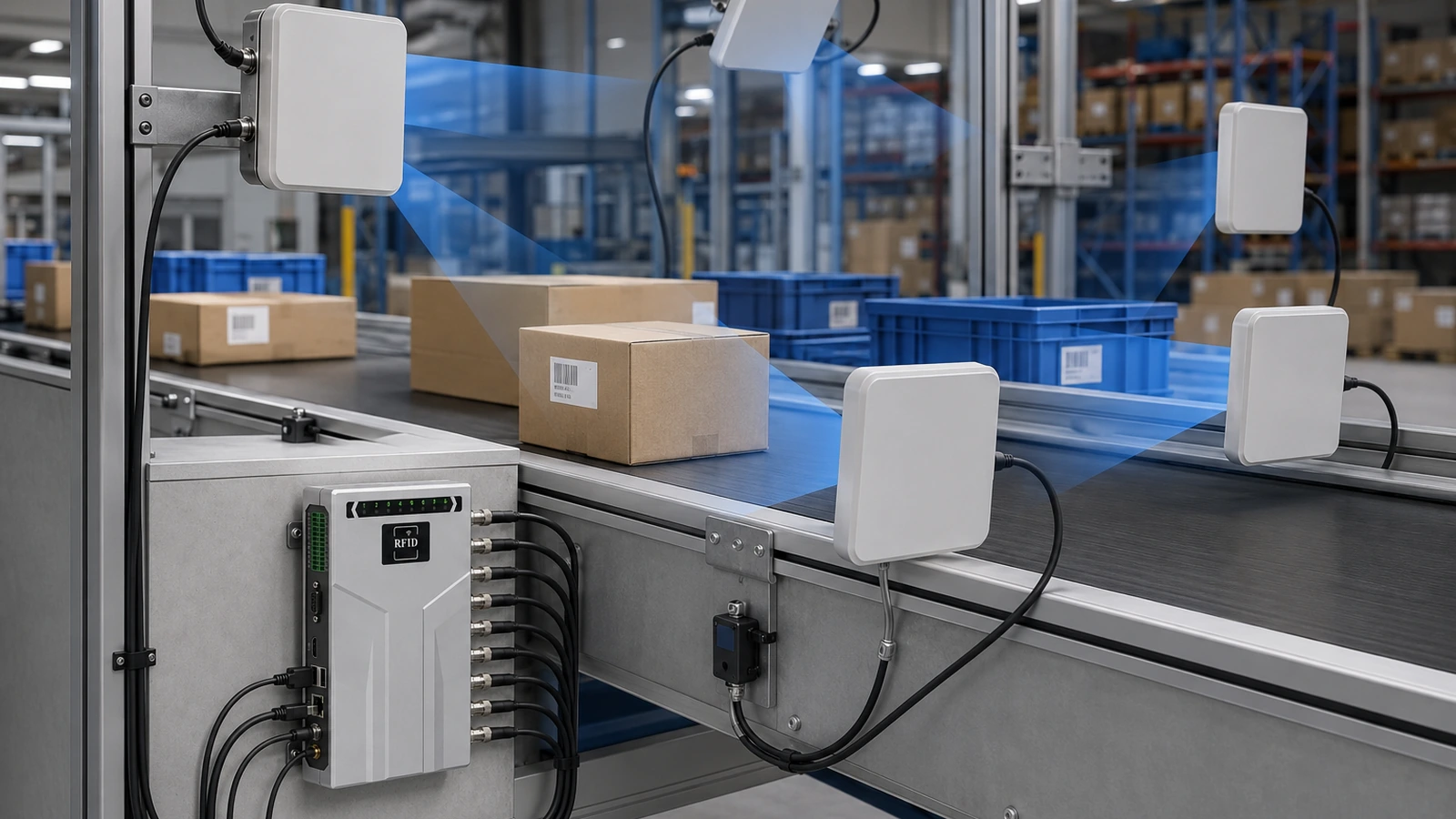
Smart Warehouse & Dock-Door Events
Capture tagged pallets, cartons, totes or returnable assets, filter repeated reads and forward receiving or dispatch events through the selected protocol.
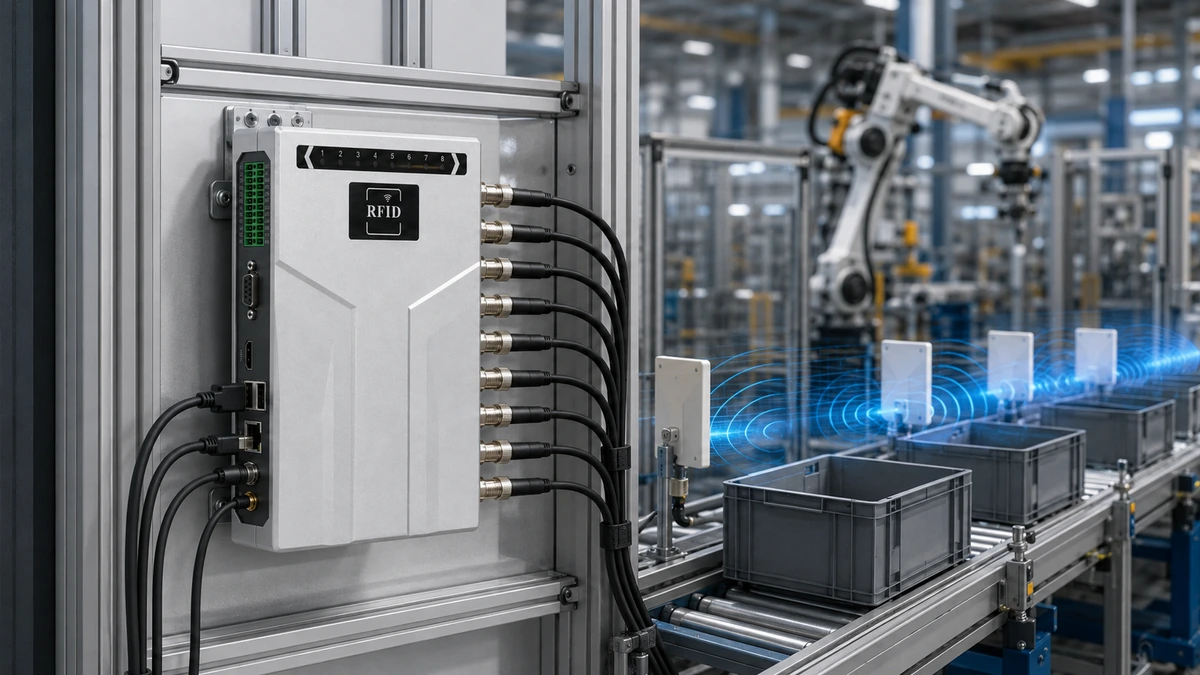
Production Line & WIP Event Processing
Identify tagged materials, fixtures, carriers or work-in-process items and apply local rules before sending the event to MES, middleware or a control application.
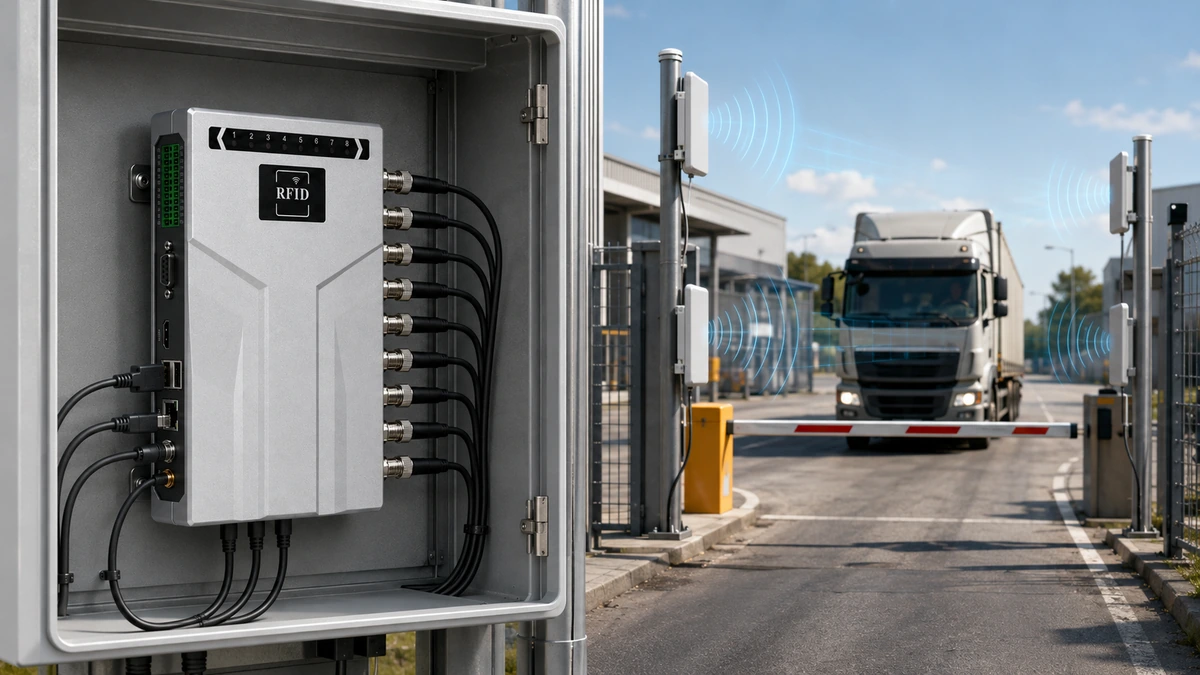
Unattended Asset Movement Monitoring
Use local direction and alarm logic to identify tagged-asset movement while retaining events during temporary network interruptions.

Deployment Guidance
Plan the RLF-8PA edge workflow before deployment
Define the event rules, offline behavior, system interface and validation conditions before commissioning the RFID checkpoint.
Define the event rules
Confirm duplicate windows, direction logic, approved tag lists, exception rules and the event payload required by the receiving system.
Define offline recovery
Confirm cache capacity, retry logic, synchronization order and duplicate protection after connectivity returns.
Validate the complete read point
Test the antenna, cable, tag, material, movement, RF settings, edge rules and network conditions together.
Specifications
RLF-8PA RFID, edge-computing and interface specifications
Review the RFID engine, Android platform, middleware functions, protocol options, local storage, antenna connections, network interfaces, power and physical requirements before project selection.
| RFID Performance | Working Frequency | GB: 920–925 MHz and 840–845 MHz; FCC: 902–928 MHz; ETSI: 865–868 MHz; Japan: 916–920 MHz |
|---|---|---|
| Air Protocol | ISO/IEC 18000-6C / EPC Class 1 Gen 2; optional GB/T 29768 and GJB 7377.1 support | |
| RFID Engine | Impinj R2000, Impinj E710 or approved high-performance RFID chipset | |
| RF Output Power | Up to 33 dBm ±1 dB, adjustable in 1 dB steps | |
| Frequency Mode | FHSS or fixed frequency, software configurable | |
| Tag Read Speed | 400 or up to 1,000 tags per second, depending on the selected RFID engine and operating conditions | |
| Maximum Read Range | Up to 30 m, depending on antenna, cable, tag, RF settings, orientation, material, movement and environment | |
| Maximum Write Range | Up to 12 m, depending on antenna, cable, tag, RF settings, orientation, material and environment | |
| Receiver Sensitivity | Stated RSSI value: -85 dBm | |
| Edge Computing | Processor | ARM-A55 64-bit quad-core processor, up to 2.0 GHz |
| AI / Graphics | 1 TOPS NPU, Mali-G52 GPU and Vulkan 1.1 | |
| Memory | 2 GB RAM + 16 GB storage standard; 4 GB / 8 GB and 32 GB / 64 GB / 128 GB options listed | |
| Expandable Storage | Built-in SD-card option, up to 256 GB | |
| Operating System | Android 7.0 stated in the supplied document; confirm current shipping version before publication | |
| Development Languages | C, C#, Java, HTML5, Python and other supported environments | |
| Middleware & Data | Local RFID Functions | Direction detection, duplicate filtering, breakpoint recovery and blacklist / whitelist management |
| Protocol Communication | HTTP, MQTT, TCP, UDP and serial communication | |
| Offline Cache | More than one million tag events with synchronization after connectivity returns | |
| Remote Management | Firmware update, parameter tuning and diagnostics through the supported remote-management environment | |
| Health Monitoring | Antenna status and tag-read monitoring | |
| Auto-Antenna Matching | Supported according to the supplied product description | |
| Interfaces | Antenna Ports | 8 reverse-polarity TNC antenna connectors |
| Ethernet | RJ45 Ethernet; final link-speed specification requires confirmation | |
| USB | 2 × USB 2.0 | |
| Display Output | HDMI 2.0, stated support for 4K / 60 fps audio-video output | |
| Wireless | Wi-Fi and Bluetooth | |
| Mobile Network | 4G / 5G optional; Micro-SIM slot | |
| Positioning | BeiDou / GPS optional | |
| Serial & I/O | RS-232, optocoupler inputs, relay outputs and additional I/O; confirm final RS-485 support, channel count and pinout | |
| Power & Physical | Power Supply | DC 12 V input; 12 V / 5 A recommended |
| PoE | PoE+ 802.3at, 25.5 W optional | |
| Cooling | Air cooling | |
| Protection | IP55 | |
| Operating Temperature | -25 °C to +65 °C | |
| Dimensions | 215 × 162 × 34 mm | |
| Weight / Housing | 1.35 kg; CNC aluminum-alloy housing |
Publication gate: confirm the current Android version, Ethernet speed, relay-output count, RS-485 availability, final I/O pinout and selected RFID-engine configuration before this specification table is published.
Support & Documentation
Technical resources for edge integration and deployment

Product Datasheet
Review RFID performance, Android hardware, middleware functions, interfaces, wireless options, power and physical specifications.
Request datasheet →API & Edge Middleware Guide
Request supported APIs, protocol documentation, local middleware configuration, sample payloads and development guidance.
Request API guide →MQTT, Cache & Interface Guide
Review MQTT connection requirements, offline-cache behavior, synchronization logic, network options, I/O wiring and remote-management requirements.
Discuss integration →Integration FAQ
RLF-8PA edge-processing, MQTT and deployment questions
How is RLF-8PA different from a standard fixed RFID reader?
RLF-8PA combines the RFID engine with an Android computing platform, built-in middleware, local storage and network protocols. It can filter, cache and route RFID events locally instead of sending every raw read to an always-online external host.
Does RLF-8PA support MQTT?
Yes. The supplied information lists MQTT together with HTTP, TCP, UDP and serial communication. Confirm the final MQTT client settings, authentication method, TLS support, topic structure and payload format for the project.
Can the reader operate without a permanently connected host PC?
The Android platform and built-in middleware are intended to support standalone edge operation for approved workflows. The final application, local user interface, peripherals and business rules still need to be defined and validated for the project.
What happens if the network connection is interrupted?
The supplied product information states that more than one million tag events can be cached locally and synchronized after connectivity returns. Confirm the exact retention, retry, ordering and duplicate-control behavior before deployment.
Which local RFID-processing functions are available?
The supplied information lists direction detection, duplicate filtering, breakpoint recovery, blacklist and whitelist management, antenna-status monitoring and local event processing. Confirm which functions are included in the selected firmware and middleware package.
How many external antennas can RLF-8PA connect?
RLF-8PA provides eight reverse-polarity TNC antenna ports. Antenna type, position, cable length, coverage direction and RF power should be selected around the actual checkpoint and validated on site.
Can RLF-8PA detect entry and exit direction without an external sensor?
The product information states that directional tracking can be performed without an external direction sensor. Reliable direction results still depend on antenna layout, tag path, spacing, speed, RF settings and the configured algorithm.
Does RLF-8PA support Wiegand?
Wiegand is not confirmed for this model and is intentionally excluded from this page. Use the confirmed network, serial, MQTT, API and I/O options, or request a different reader configuration when Wiegand is mandatory.
Can RFID events be sent to MES, WMS, ERP or a cloud platform?
Yes, through MQTT, HTTP, TCP, UDP, serial communication or a project-specific API and integration layer. This page does not claim a native connector for every MES, WMS, ERP or cloud platform.
Does the reader support remote management?
The supplied information lists remote firmware updates, parameter tuning and diagnostics. Confirm the management platform, network-security requirements, user permissions and supported deployment topology before publication.
Which Android and memory configuration should be ordered?
The supplied document lists Android 7.0, 2 GB + 16 GB as the base configuration and several higher-memory options. Confirm the current shipping Android version, application requirements, storage retention and peripheral load before ordering.
What should be validated before deployment?
Validate the final antenna, tag, tagged material, cable, RF power, movement path, direction logic, filter window, offline duration, cache recovery, MQTT or API contract, I/O wiring, network security and operating environment.
Project Review
Define the RLF-8PA edge workflow for your RFID checkpoint
Share the tagged items, checkpoint layout, antenna count, event rules, duplicate-filter window, direction requirement, expected offline duration, cache and synchronization behavior, MQTT broker or API contract, network security, local peripherals, I/O signals, operating region and project quantity.