
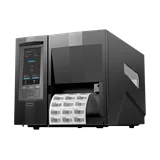
UHF RFID tags and smart-label materials
RFID Tags
Raylink RFID tags include printable labels, inlays, anti-metal tags, rigid tags, laundry tags, liquid-compatible tags, process-resistant tags and sensing constructions for application-specific UHF RFID projects.
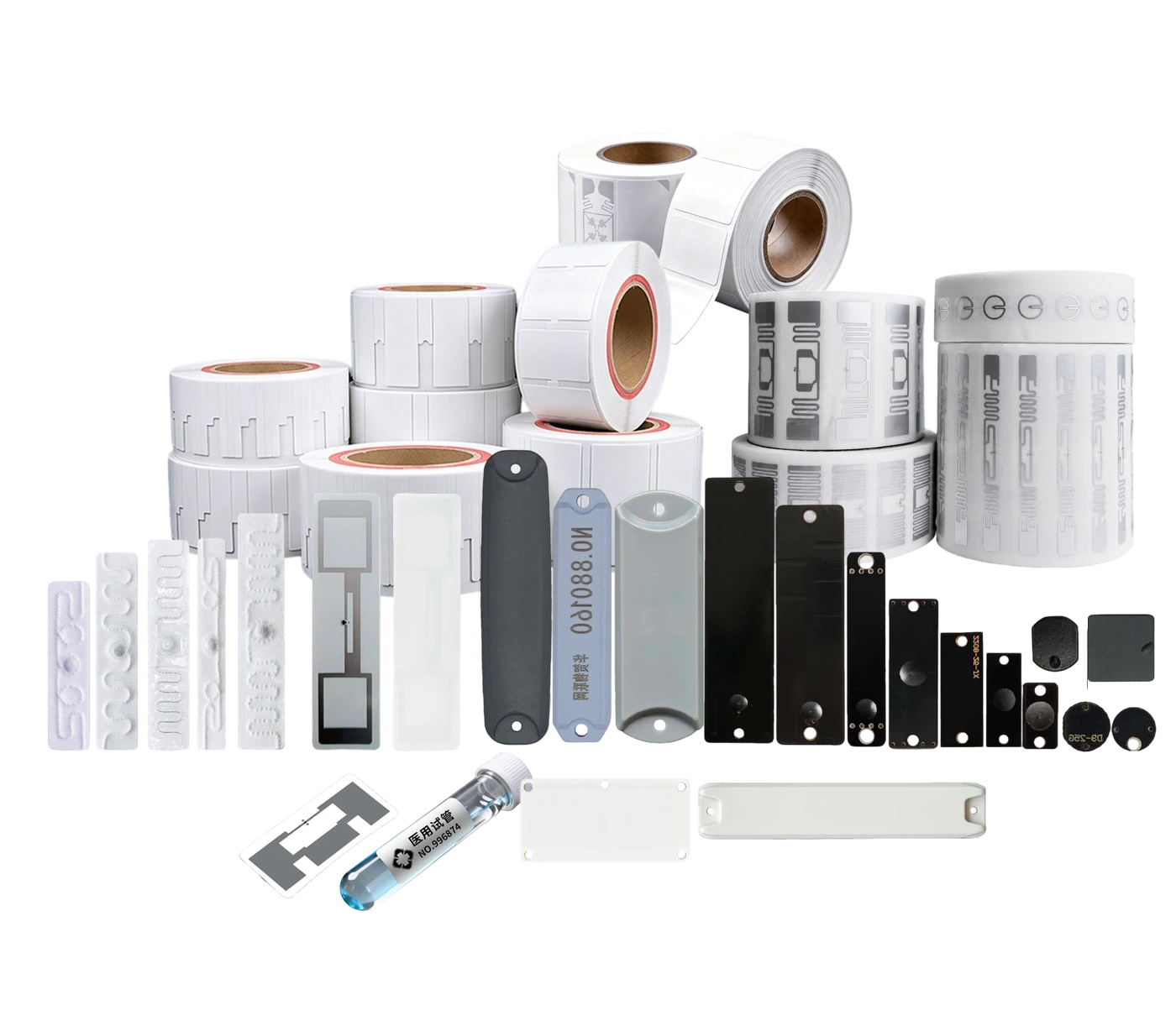
RFID tag families
Choose the tag construction before the chip
Start with the tagged object, mounting surface, environment and required read zone. Then confirm the inlay, chip memory, adhesive, housing and production format as one tag configuration.
Product lineup
UHF RFID Tag Families
Compare the tag construction first, then confirm the mounting surface, temperature, chemicals, wash process, tamper behavior, sensor requirement, chip memory and final converting format.
Printable and converting materials
RFID Labels and Inlays
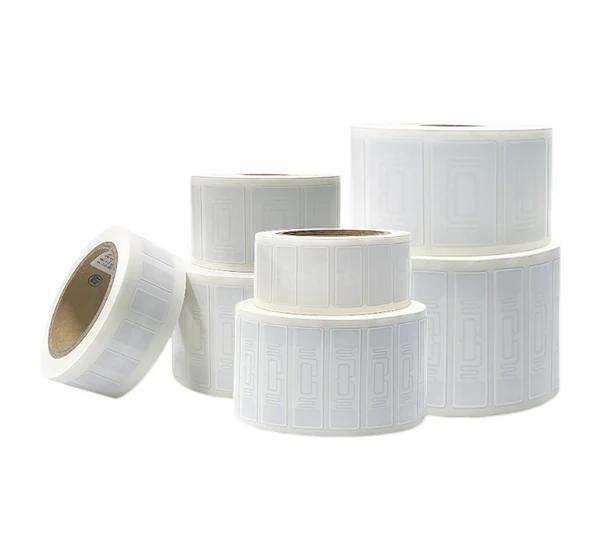
Printable adhesive RFID media
UHF RFID Labels
Printable UHF RFID labels combine a face material, adhesive, inlay and liner for cartons, packaging, documents and general asset identification.
- Confirm face stock, adhesive and final mounting surface
- Match label size, inlay position and printer encoding zone
- Validate barcode, print durability and RFID performance together
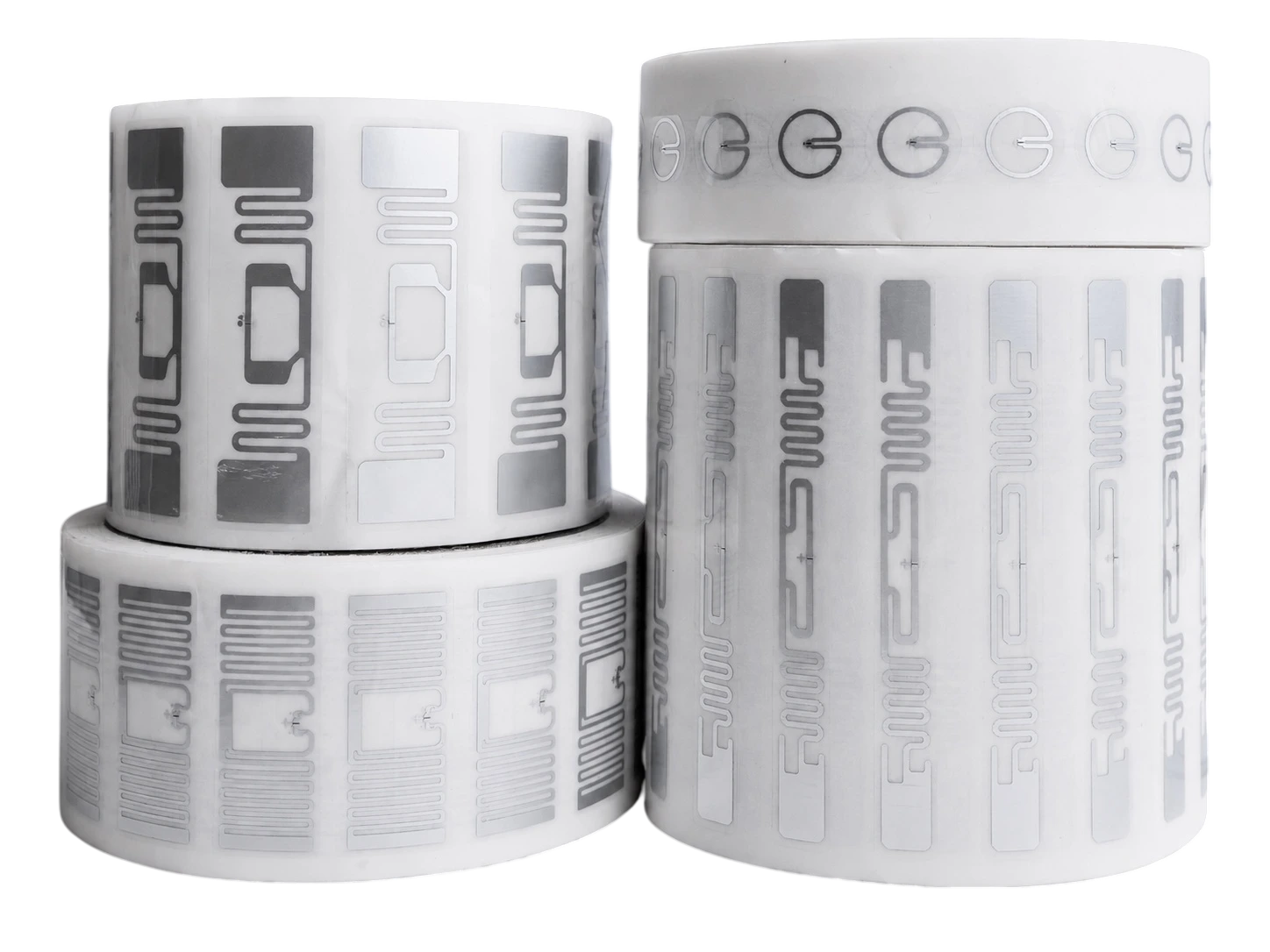
Dry and wet inlay components
UHF RFID Inlays
UHF RFID inlays provide the antenna and chip structure used by converters and equipment builders to create application-specific labels and embedded tag constructions.
- Select antenna size and chip according to the read zone
- Confirm dry or wet construction, pitch and web direction
- Validate converting, lamination and final material interaction
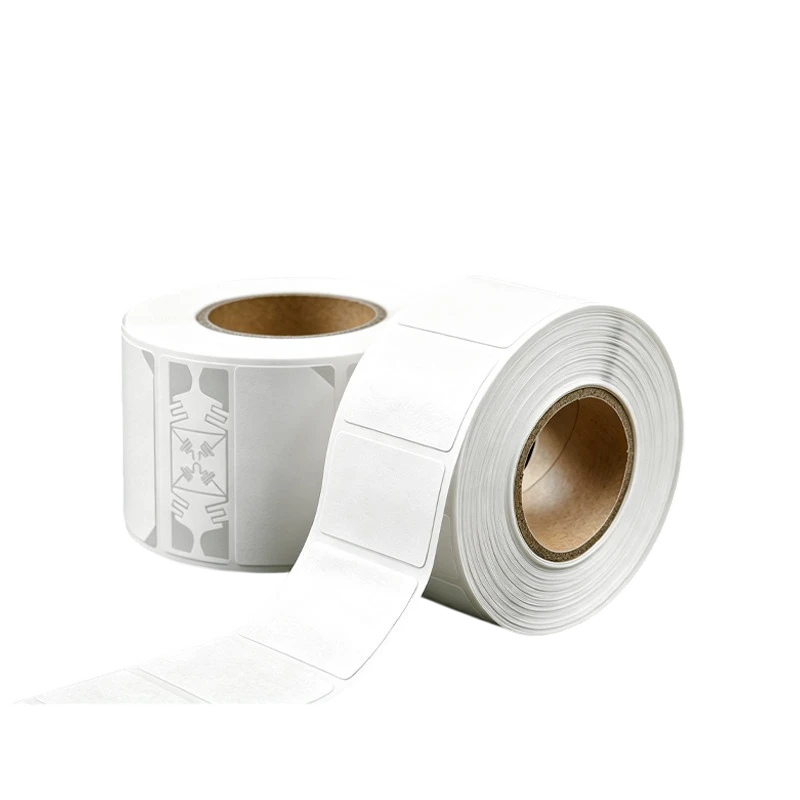
Printable labels for medical identification
Medical UHF RFID Labels
Medical UHF RFID labels provide item-level identification for medical consumables, records, specimen containers and smart-cabinet inventory, combining a printable face stock, adhesive and a UHF inlay tuned for medical packaging.
- Confirm the labeled item, surface material and curvature
- Review read performance inside cabinets, on shelves and in stacked storage
- Validate printing, encoding, adhesive and any tamper or archiving requirement
Industrial and material-specific tags
Tags Designed Around the Object and Environment
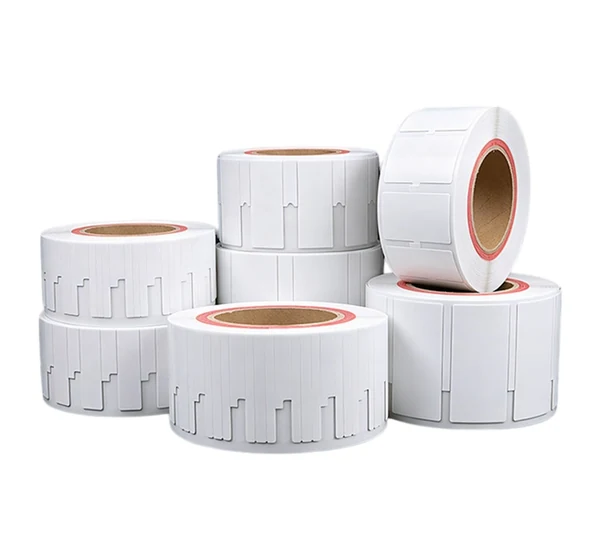
Metal-mounted RFID construction
Flexible UHF Anti-Metal RFID Tags
Flexible UHF anti-metal RFID tags use a low-profile tuned layer or spacer to maintain performance when adhered directly to metal tools, equipment enclosures and reusable assets.
- Confirm metal type, available footprint and surface curvature
- Review read distance, orientation and nearby metal geometry
- Validate adhesive, print surface, flexing and environmental exposure
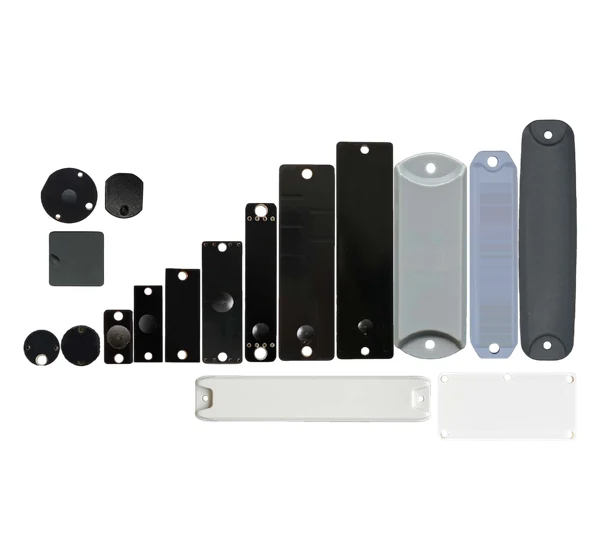
Durable reusable asset tags
Rigid UHF RFID Tags
Rigid UHF RFID tags use a protective housing for returnable assets, containers, tools, vehicles and industrial equipment exposed to handling or impact.
- Select enclosure, mounting holes and attachment method
- Confirm IP, impact, UV and chemical requirements
- Validate the tag on the actual asset and installation angle
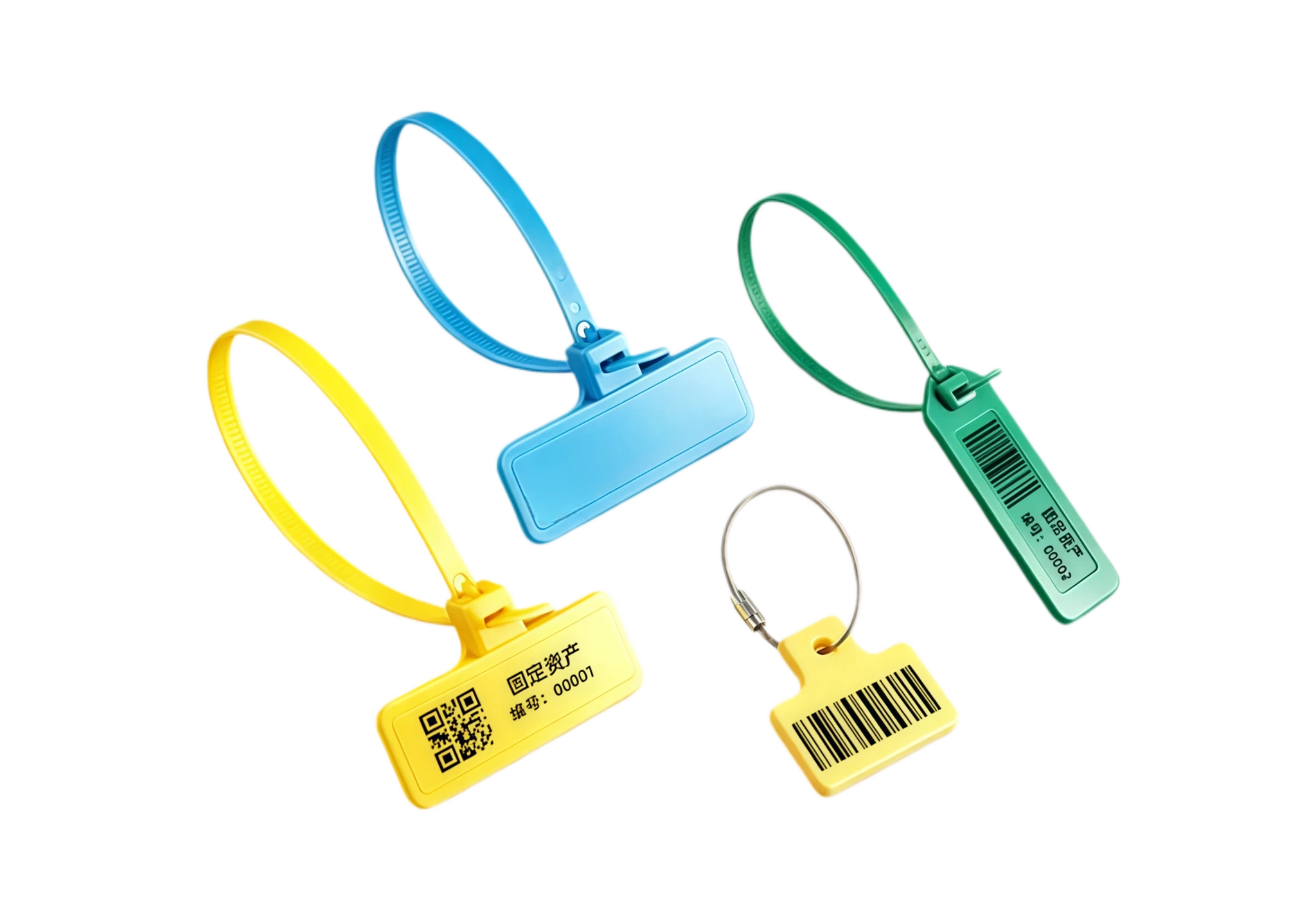
Strap-mounted reusable identification
UHF RFID Cable-Tie Tags
UHF RFID cable-tie tags combine a UHF inlay with a locking nylon strap for assets that have no flat adhesive surface, such as pallets, cages, cables, hoses, gas cylinders and outdoor equipment.
- Confirm strap length, locking style and tag position on the object
- Review read range, orientation and nearby metal or liquid
- Validate strap strength, outdoor exposure and one-time or reusable locking
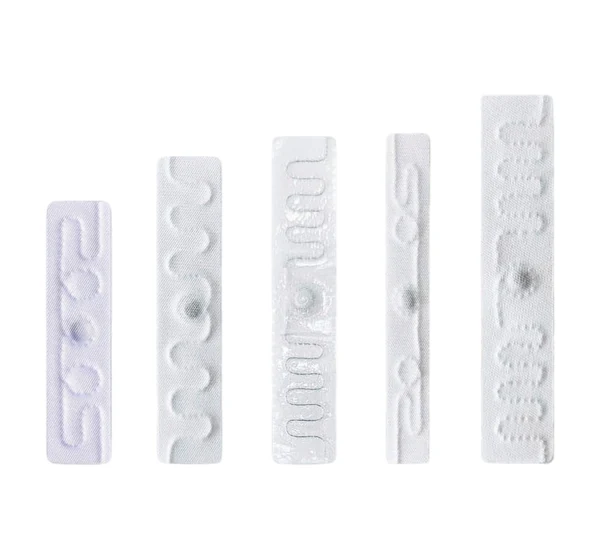
Washable textile identification
UHF Laundry RFID Tags
Laundry RFID tags are designed for repeated textile identification through washing, drying, pressing and garment circulation workflows.
- Confirm wash cycles, peak temperature and chemical exposure
- Choose sew-in, heat-seal, pouch or button construction
- Test folding, stacking and reader placement in the real process
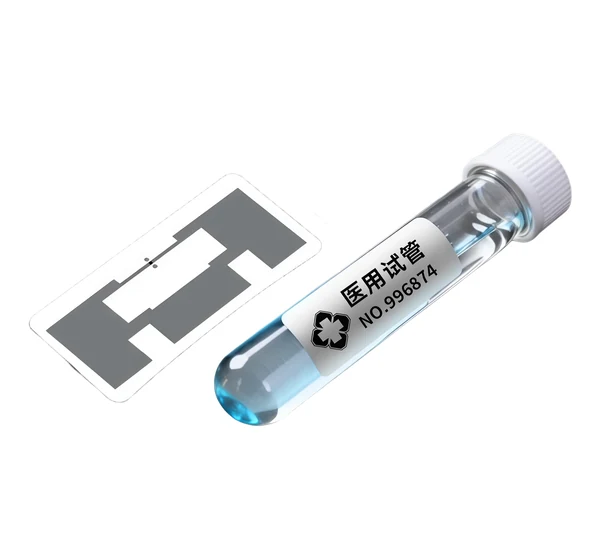
Liquid-container RFID tuning
On-Liquid UHF RFID Tags
On-liquid UHF RFID tags use a construction and antenna position selected for bottles, containers and products whose liquid content changes RF behavior.
- Confirm container material, liquid type and fill level
- Review label position, orientation and curvature
- Validate the full and empty container states where relevant
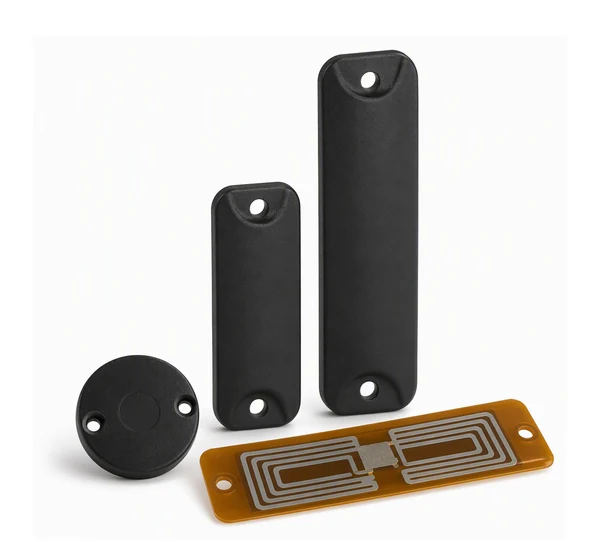
Process-resistant RFID identification
High-Temperature Resistant UHF Tags
High-temperature UHF RFID tags are selected for industrial processes where the tag must tolerate defined heat exposure while remaining readable afterward.
- Confirm continuous and peak temperature separately
- Review exposure duration, pressure, chemicals and cooling cycle
- Validate mounting and post-process read performance
Control and sensing tags
Tamper and Condition-Monitoring RFID Tags
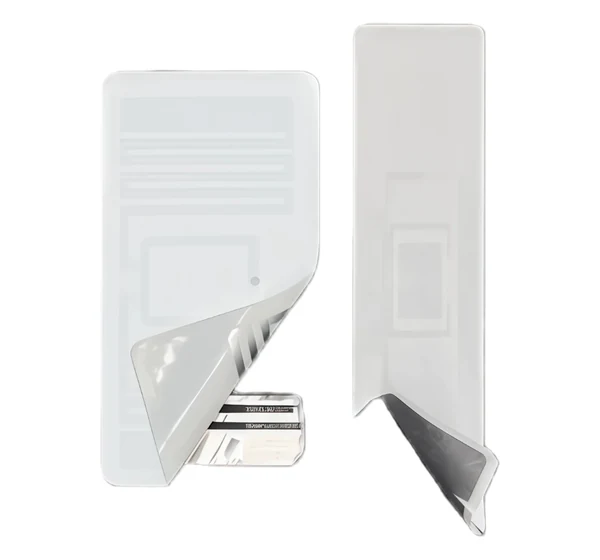
Removal and seal-state indication
Tamper-Evident UHF Tags
Tamper-evident UHF RFID tags are designed to change, break or transfer when removed so the physical seal state can support product and asset control.
- Define the required break, transfer or destruct behavior
- Confirm substrate adhesion and removal direction
- Validate what the reader or software should detect after tampering
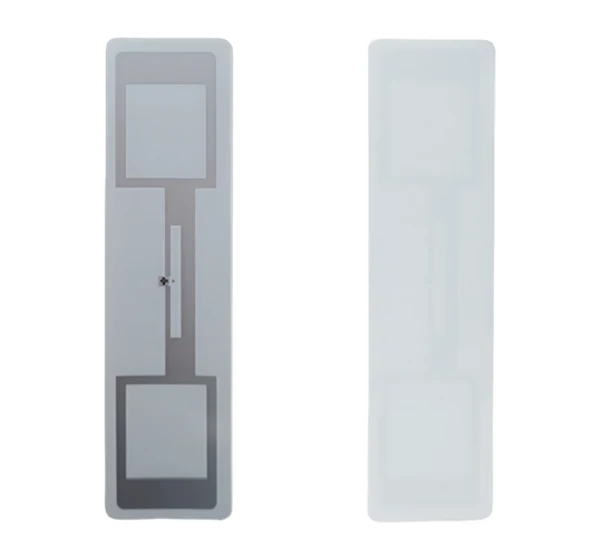
Passive condition-monitoring tags
Temperature-Sensing UHF Tags
Temperature-sensing UHF RFID tags combine identification with sensor data for projects that need item-level temperature records or threshold checks.
- Confirm sensing range, accuracy and logging method
- Review reader, command and software compatibility
- Validate sensor placement, response time and data interpretation
Tag family comparison
Compare RFID Tags by Construction and Application Fit
The same chip can behave differently when the antenna, material stack, object and mounting position change. Use the table to narrow the construction, then validate samples on the actual item.
| Tag family | Construction | Best for | Main environment factor | What to confirm |
|---|---|---|---|---|
| UHF RFID Labels | Printable face stock, adhesive, inlay and liner | Cartons, packaging, documents and general assets | Surface, adhesive and printing process | Label size, inlay position, printer and final mounting surface |
| UHF RFID Inlays | Dry or wet antenna-and-chip component | Converters, embedded products and custom labels | Material stack and antenna geometry | Chip, antenna size, pitch, web direction and lamination |
| Medical UHF RFID Labels | Printable face stock, adhesive and UHF inlay for medical items | Consumables, medical records, specimen containers and smart cabinets | Curved surfaces, liquids and metal cabinet shelving | Item material, label size, adhesive, encoding and cabinet read validation |
| Flexible UHF Anti-Metal RFID Tags | Flexible tuned label or spacer construction for metal | Tools, equipment enclosures, IT assets and reusable containers | Metal geometry, curvature and adhesive mounting | Footprint, read distance, orientation, print surface and attachment |
| Rigid RFID Tags | Protected plastic or industrial enclosure | Containers, vehicles, assets and outdoor equipment | Impact, ingress, UV and chemicals | Housing, fixing method, IP requirement and asset material |
| UHF RFID Cable-Tie Tags | UHF inlay integrated with a locking nylon strap | Pallets, cages, cables, hoses and assets without a flat adhesive surface | Outdoor exposure, handling and strap tension | Strap length, locking method, tag orientation and required read range |
| Laundry RFID Tags | Textile, button, pouch or heat-seal construction | Garments, uniforms, linen and textile circulation | Wash, dry, press and folding cycles | Cycle count, temperature, chemicals and attachment method |
| On-Liquid RFID Tags | Liquid-tuned label or tag structure | Bottles, liquid containers and filled products | Liquid dielectric effect and container curvature | Liquid type, fill level, label position and orientation |
| High-Temperature RFID Tags | Heat-resistant housing, substrate or adhesive | Industrial processing, coating, curing and heat exposure | Peak temperature, duration and chemicals | Continuous/peak limits, cycle time, mounting and post-process read |
| Tamper-Evident RFID Tags | Destructible, transfer or breakable antenna structure | Seals, warranty control, packaging and protected assets | Removal direction and substrate adhesion | Required tamper behavior and software interpretation |
| Temperature-Sensing RFID Tags | UHF identification with sensor capability | Cold chain, condition monitoring and threshold checks | Sensing range, placement and reader commands | Accuracy, logging mode, reader/SDK compatibility and data workflow |
Chip specification reference
UHF RFID Chip Parameters
Use the chip table as an initial memory and sensitivity reference. Final tag performance still depends on the antenna design, tag construction, object, mounting and reader environment.
| Chip company | Chip model | Read sensitivity | TID code | Access | Kill | EPC | User |
|---|---|---|---|---|---|---|---|
| Alien | Higgs 3 | -18dbm | E2003412 | 32 | 32 | 96-496 | 512 |
| Higgs 4 | -18.5dBm | E2003414 | 32 | 32 | 128 | 128 | |
| Higgs-EC | -22.5dBm | E2003811 E2003812 | 32 | 32 | 128 | 128 | |
| Higgs 9 | -22.5dBm | E2003821 | 32 | 32 | 96-496 | 688 | |
| Higgs 10 | -23dBm | E2803813 | 32 | 32 | 96(128) | 32(0) | |
| NXP | Ucode 7 | -21dBm | E2806890 | 32 | 32 | 128 | 0 |
| Ucode 7m | -21dBm | E2806811 | 32 | 32 | 128 | 32 | |
| Ucode 7xm | -19dBm | E2C06D12 | 32 | 32 | 448 | 1024 | |
| Ucode 7xm+ | -19dBm | E2C06D92 | 32 | 32 | 448 | 2048 | |
| Ucode 8 | -23dBm | E2806894 | 32 | 32 | 128 | 0 | |
| Ucode 8m | -23dBm | E2806994 | 32 | 32 | 96 | 32 | |
| Ucode 9 | -24dBm | E2806995 | 0 | 32 | 96 | 0 | |
| Ucode 9xe | -24dBm | E2806A16 | 0 | 32 | 128 | 0 | |
| Ucode 9xm | -24dBm | E2806897 | 32 | 32 | 128 / 256 / 496 | 752 / 624 / 384 | |
| Ucode DNA | -19dBm | E2C06892 | 32 | 32 | 224 | 3072 | |
| UCODE DNA Track | -19dBm | E2C06C12 | 32 | 32 | 448 | 256 | |
| Ucode DNA City | -19dBm | E2C06B12 | 32 | 32 | 224 | 1024 | |
| Ucode G2XM | -15dBm | E2006003 | 32 | 32 | 240 | 512 | |
| Ucode G2XL | -15dBm | E2006004 | 32 | 32 | 240 | 0 | |
| Ucode G2iL | -18dBm | E2006806 | 32 | 32 | 128 | 0 | |
| Ucode G2iL+ | -18dBm | E2006807 | 32 | 32 | 128 | 0 | |
| Ucode G2iM | -17.5dBm | E200680A | 32 | 32 | 256 | 512 | |
| Ucode G2iM+ | -17.5dBm | E200680B | 32 | 32 | 448 | 640 | |
| Ucode I2C | -18dBm | E200680D | 32 | 32 | 160 | 3328 | |
| Impinj | Monza 4i | -22dBm | E2801114 | 32 | 32 | 256 | 480 |
| Monza 4D | -22dBm | E2801100 | 32 | 32 | 128 | 32 | |
| Monza 4E | -22dBm | E280110C | 32 | 32 | 496 | 128 | |
| Monza 4QT | -22dBm | E2801105 | 32 | 32 | 128 | 512 | |
| Monza R6 | -22.1dBm | E2801160 | 0 | 0 | 96 | 0 | |
| Monza R6-P | -22.1dBm | E2801170 | 32 | 32 | 128 | 32 | |
| Monza R6-A | -22.1dBm | E2801171 | 32 | 32 | 96 | 0 | |
| Monza R6-B | -22.1dBm | E2801171 | 32 | 32 | 96 | 0 | |
| M730 | -24dBm | E2801191 | 32 shared | 128 | 0 | ||
| M750 | -24dBm | E2801190 | 32 shared | 96 | 32 | ||
| M770 | -24dBm | E28011A0 | 32 shared | 128 | 32 | ||
| M780 | -23.5dBm | E28011C0 | 32 shared | 496 | 128 | ||
| M781 | -23.5dBm | E28011C1 | 32 shared | 128 | 512 | ||
| Fudan | FM13UF011E | -24.2dBm | E2827803 | 32 | 32 | 96-496 | 512-112 |
| FM13UF0051E | -24.2dBm | E2827802 | 32 | 32 | 128 | 32 | |
Values are reproduced from the supplied chip reference images. Confirm the current manufacturer datasheet, exact memory units, chip revision, regional protocol support and commercial availability before publishing the final specification or locking the tag BOM. “32 shared” preserves the source table’s shared Access/Kill notation.
Selection logic
What to Confirm Before Choosing an RFID Tag
Treat the tagged object, read zone, environment, construction, chip and production process as one tag configuration.
Tagged object
Confirm the object material, size, curvature, contents, movement and whether the tag will be hidden, stacked or handled.
Read zone
Define the required distance, orientation, reader antenna, tag population and unwanted-read boundary.
Environment
Review metal, liquid, temperature, moisture, UV, chemicals, wash cycles, impact and outdoor exposure.
Construction
Select the label, inlay, spacer, housing, adhesive, attachment and converting format required by the project.
Chip and memory
Confirm protocol, sensitivity, EPC length, User memory, TID, Access/Kill requirements and any sensor or security function.
Sample validation
Test the production tag, reader, object, mounting, movement, environment, encoding and software workflow together.
RFID tag workflows
Match the Tag to the Object, Environment and Read Point
A tag family becomes useful only after its construction, chip and mounting method are validated in the actual operating workflow.
Retail, logistics and document labels
Use printable labels or converted inlays for item, carton, shipment, document and general asset identification.
Industrial assets and reusable equipment
Use anti-metal, rigid or process-resistant tags for tools, machinery, containers, vehicles and work-in-process assets.
Textile, liquid and condition monitoring
Use laundry, liquid-compatible, tamper-evident or sensing constructions when the environment changes standard label behavior.
FAQ
RFID Tag Questions
How do I choose the correct UHF RFID tag?
Start with the tagged object, mounting surface, operating environment and required read zone. Then choose the tag construction, antenna, chip memory and attachment method and validate samples on the real item.
Does higher chip sensitivity always create a longer read range?
No. Chip sensitivity is one input. Antenna design, tag size, object material, orientation, reader output, reader antenna and the RF environment all affect the final read range.
Which RFID tags work on metal?
Use a tag specifically designed for metal, such as an anti-metal label, spacer construction or rigid on-metal tag. A standard paper label normally requires separation from the metal surface.
Can a standard UHF RFID label be placed on a liquid container?
Liquid can detune a standard inlay. Select a liquid-compatible construction and validate the container material, liquid type, fill level, label position and orientation.
How should I choose the chip and memory size?
Confirm the EPC structure, User memory, TID requirement, Access/Kill use, security or sensor functions, encoding equipment and software data model before selecting the chip.
What information should I send for tag sample matching?
Send the object material and dimensions, photos, mounting position, required distance, reader and antenna, environment, label size, printing/encoding process and estimated quantity.
Project guidance
Need Help Matching an RFID Tag to the Actual Object?
Send the object, surface, dimensions, operating environment, read distance, reader/antenna, chip memory, printing or encoding process and expected quantity.