
UHF RFID Ceiling Reader
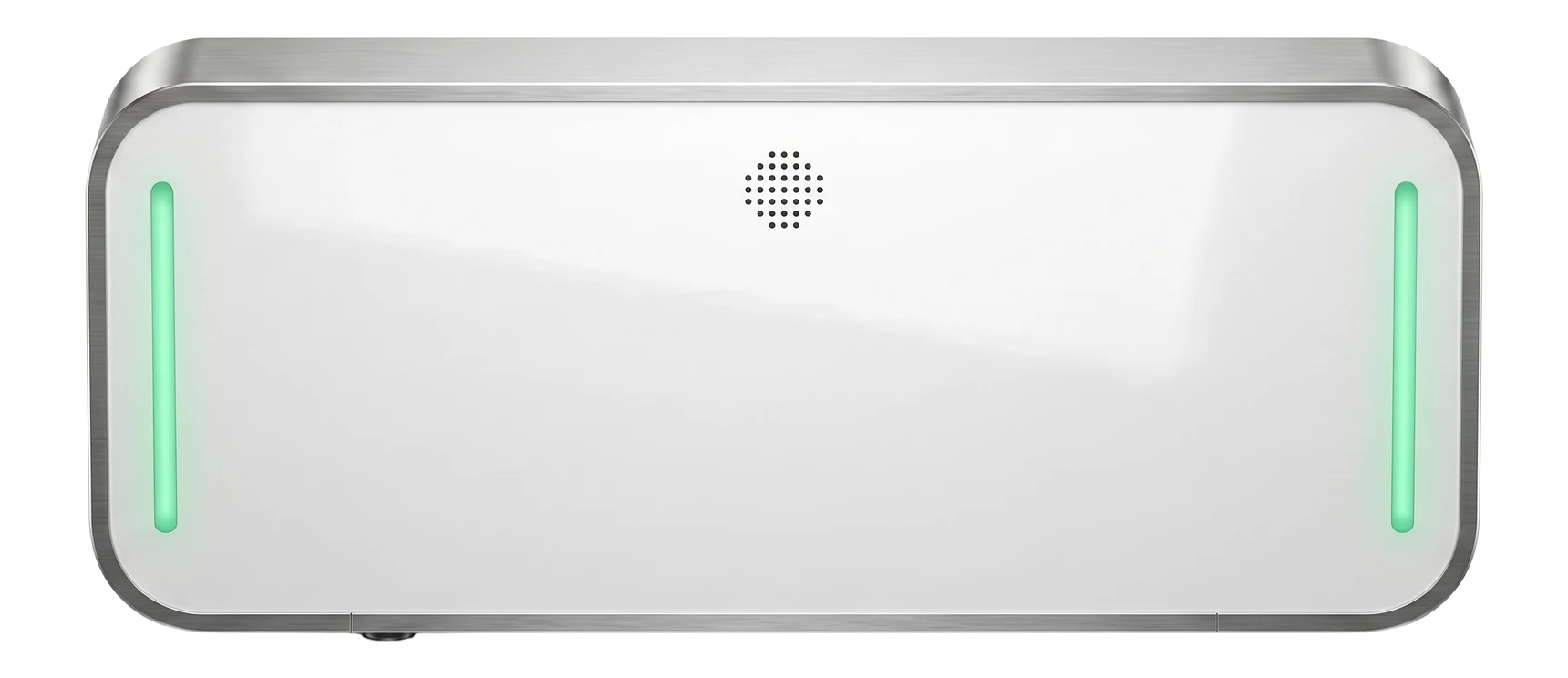
RLC-100 UHF RFID Ceiling Reader
Monitor tagged movement from above with overhead RFID coverage, sensor-triggered detection and edge event handling. RLC-100 is designed for controlled entrances, asset rooms and operational checkpoints, with Android-based processing, local caching and direct system communication.



* Sensor type, read rate, read distance and interface availability depend on the selected configuration. RFID performance depends on tag type, tagged material, mounting height, antenna design, orientation, RF settings, movement path, interference and site conditions.
Why Use RLC-100?
Create an automatic RFID monitoring point above the operational route
Use RLC-100 where tagged assets pass through a defined entrance, room or checkpoint and the project needs event capture, local processing and alert integration without placing reader equipment in the traffic path.
Monitor the route without using floor space
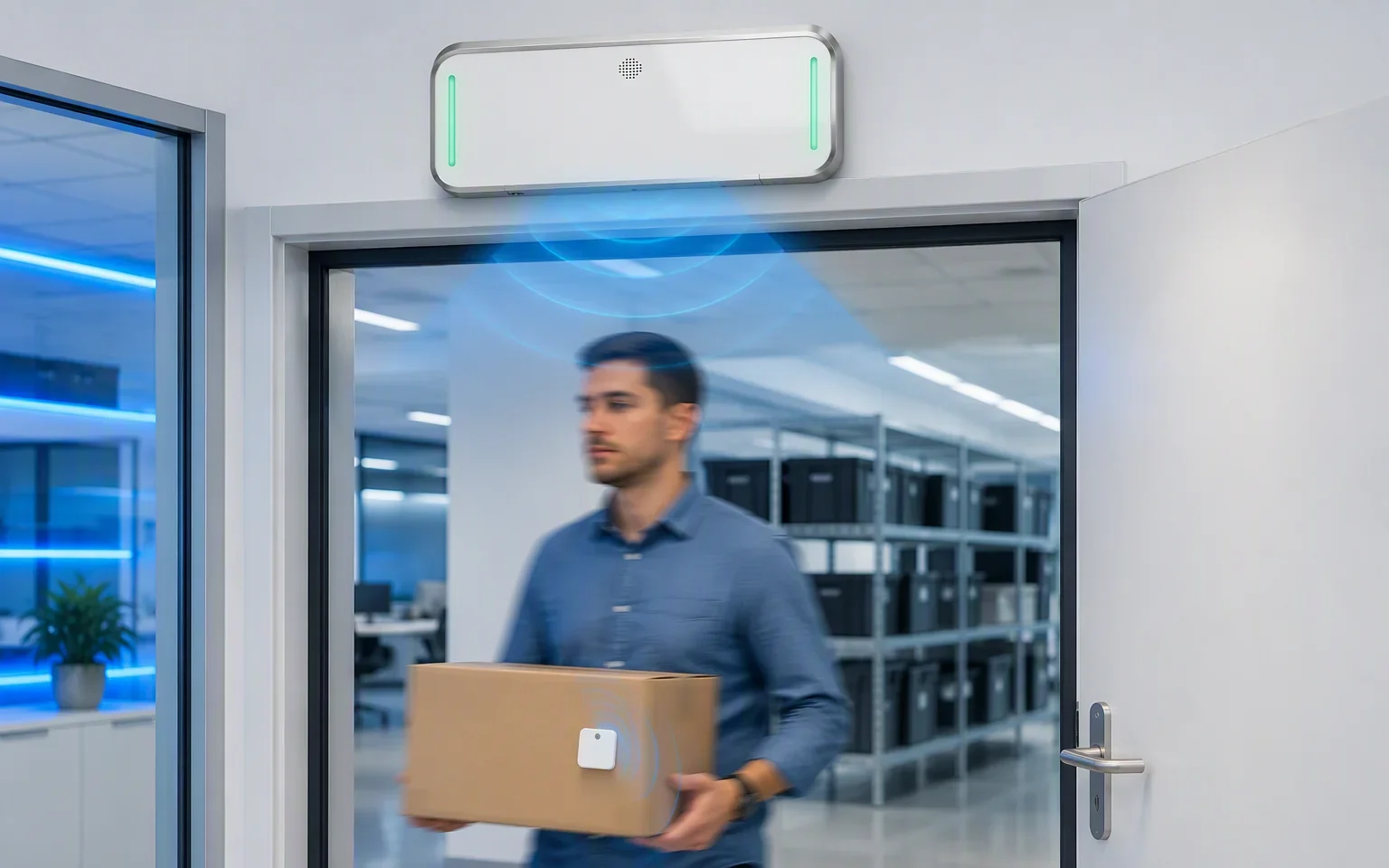
Install the reader above or beside the monitored zone to keep the passage clear while capturing compatible tagged items moving through the intended area.

Trigger monitoring around detected movement
Use the confirmed infrared or radar configuration to support event-driven RFID reading and audible or system alerts at controlled entrances and asset zones.

Process, cache and route events locally
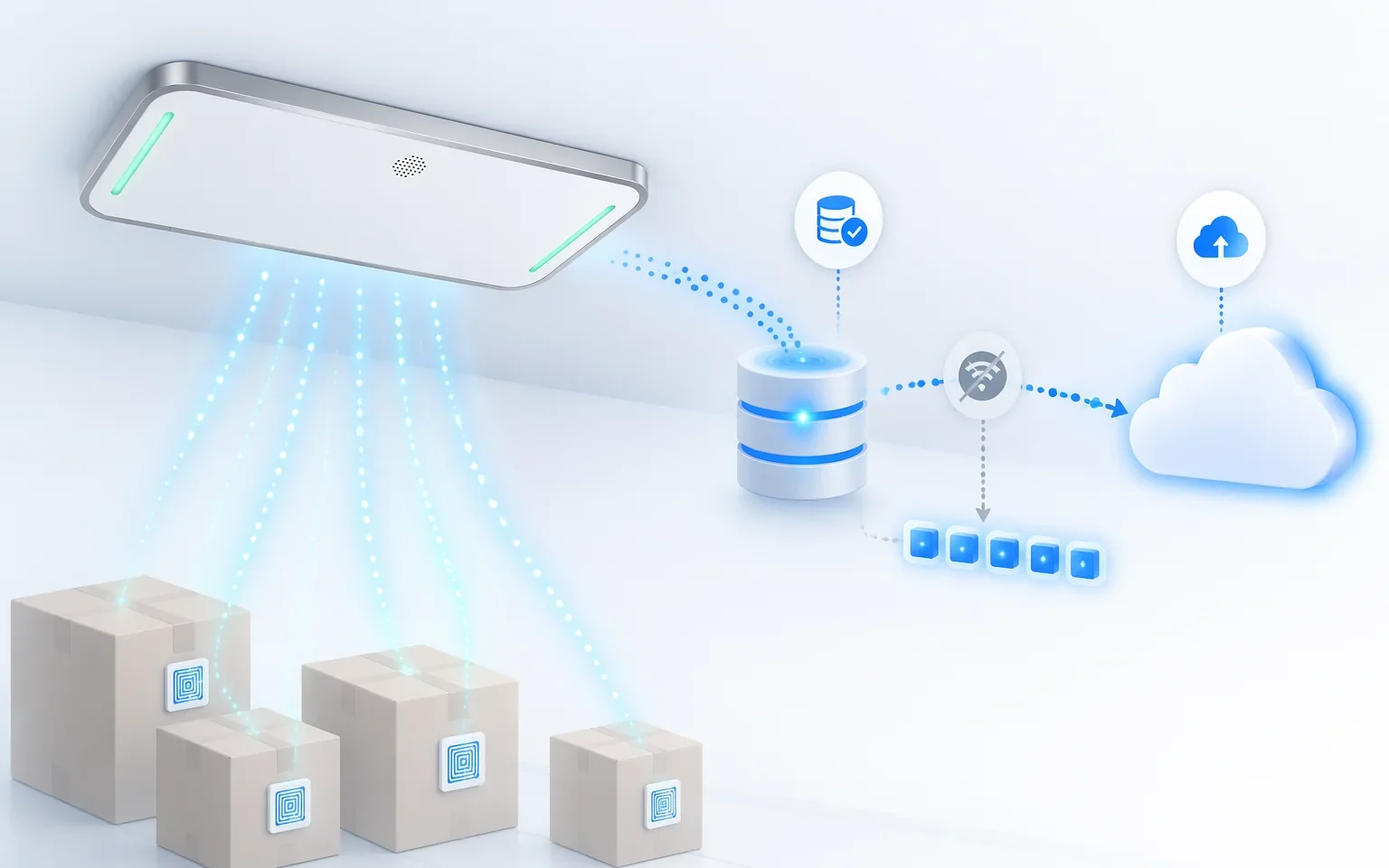
Use Android-based edge handling, local caching and HTTP, MQTT, TCP or UDP communication to reduce raw-data traffic and maintain event continuity during temporary connection loss.
Before / After
From manual zone checks to automatic overhead RFID event capture
Replace repeated observation and item-by-item confirmation with a configured overhead checkpoint that detects movement, captures compatible tags and forwards a validated event.
Manual asset-zone checking
Five repeated actions at the monitored area

The process depends on an operator being present and completing the same confirmation sequence for each movement.
Automatic overhead RFID capture
Three stages at the configured monitoring point

RLC-100 supports zone-event monitoring; it does not by itself provide exact real-time item coordinates, guaranteed person-to-item association or room-wide inventory coverage. Final behavior depends on the complete hardware, tag, sensor, mounting and software design.
Overhead RFID Zone Monitoring
Monitor tagged movement without placing equipment in the traffic path
Mount the reader above or beside a defined route and configure the RFID, movement-sensing, alert and event-forwarding behavior around the actual operational checkpoint.
Capture compatible tags, process the event locally and send the result to the approved application or alert workflow.
Entrance / Exit Passage
Monitor tagged merchandise, documents, equipment or returnable assets moving through a defined doorway or corridor.
Asset Room
Record tagged tools, devices, samples or controlled assets entering or leaving a storage or service area.
Service Counter
Support RFID-based check-in, check-out, return or exception workflows above a defined desk or transaction zone.
Industrial Checkpoint
Capture tagged materials, carriers or work-in-process items at a warehouse or production transition point.
A ceiling reader does not automatically cover an entire room. Coverage depends on mounting height, antenna pattern, tag orientation, tagged material, RF output, surrounding metal, movement path, interference and the required separation from adjacent zones.
Event System Architecture
Detect movement, capture RFID tags and route the resulting event
RLC-100 combines the selected movement sensor, UHF RFID engine, Android processing platform, local cache, alert functions and network protocols in one mounted monitoring terminal.
Movement Enters Zone
A person, asset or tagged item moves through the configured monitoring area.
Infrared / Radar Trigger
The confirmed movement-sensing configuration activates or supports the monitoring workflow.
UHF RFID Capture
The RFID engine collects compatible tag responses within the project-specific read zone.
Edge Event Handling
Local processing filters repeated reads and applies the approved device-side event logic.

Cache / Alert
Events can be cached during a connection interruption or used to support an audible, visual or external alert.
Business System
HTTP, MQTT, TCP or UDP forwards the event to the project application, WMS, MES, security platform or IoT service.
Interfaces, Sensors & Alerts
Connect the ceiling reader to the network, alarm workflow and peripheral devices
Use the confirmed wired, optional wireless and I/O configuration to connect RLC-100 with the business application, sensor logic, local alarm and installation environment.
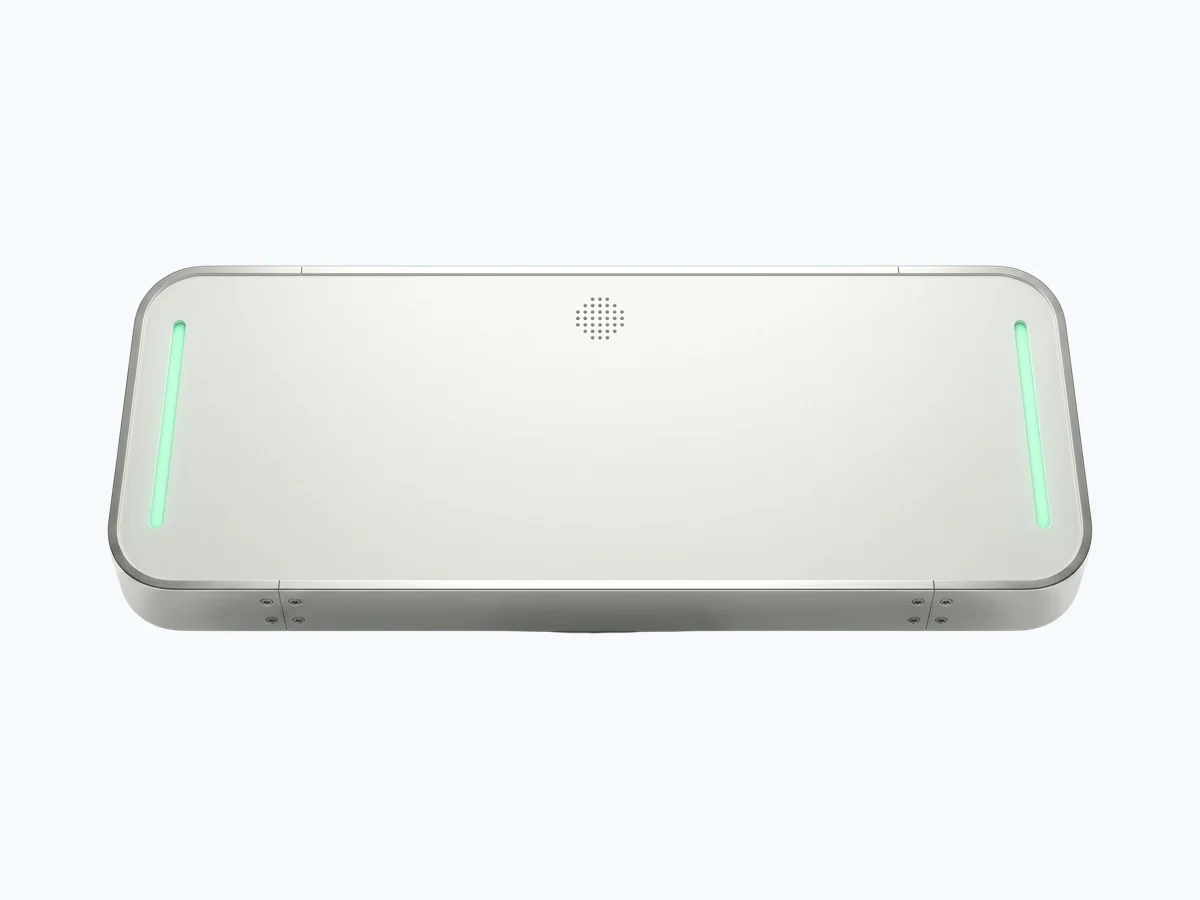
- 01Ethernet 10/100 Mbps
Connect the ceiling reader to the local host, IoT network or remote-management environment.
- 02DC Input
Use the specified power supply and confirm the final installation wiring and power-access location.
- 03Optional Serial Interfaces
The supplied document lists optional RS-232 and TTL interfaces; confirm the exact shipped configuration.
- 04Optional USB / OTG
The supplied document lists two USB 2.0 Type-A ports and one Type-C OTG interface as configuration options.
- 05Optional HDMI
A 720p HDMI output is listed for supported local-display or maintenance configurations.
- 06GPIO / I/O
Connect approved sensors, alarms or peripheral devices after the final channel count and pinout are confirmed.
HTTP, MQTT, TCP and UDP
Route RFID and alert events through the communication method selected for the project architecture.
Infrared / radar and audible alert
Use the confirmed sensor and buzzer configuration to support movement-triggered monitoring and exception workflows.
4G, Wi-Fi, Bluetooth and positioning
Choose the supported optional wireless and BeiDou / GPS configuration required by the installation.

Online upgrades and device monitoring
Use the confirmed management environment for online upgrades, remote power cycling and real-time device monitoring.
Supporting Features
Configure the ceiling reader around the monitored route and business event
Match the processing platform, RFID settings, sensor option, alert behavior, communication method and installation geometry to the required asset-movement workflow.
Android processing with Qualcomm platform
Run the approved reader application and local event-handling workflow on the configured Android hardware platform.

Local caching and automatic transmission recovery
Retain event data during a temporary connection loss and resume transmission after connectivity returns.

0–33 dBm output in 1 dB steps
Tune RF output around the selected mounting height, tag, material, movement path and required separation from adjacent zones.

Ceiling, wall or pole mounting
Select the installation position that places the intended asset route within the validated RFID and movement-sensing zone.

Applications
Overhead RFID monitoring for retail, secure assets and operational checkpoints
Use RLC-100 where compatible tagged items pass through a defined monitoring zone and the project needs automatic event capture, alert support or integration with a business system.

Retail Exit & High-Value Merchandise Zones
Support RFID-based loss-prevention and stock-movement workflows by monitoring compatible tagged merchandise passing through a configured entrance or controlled area.
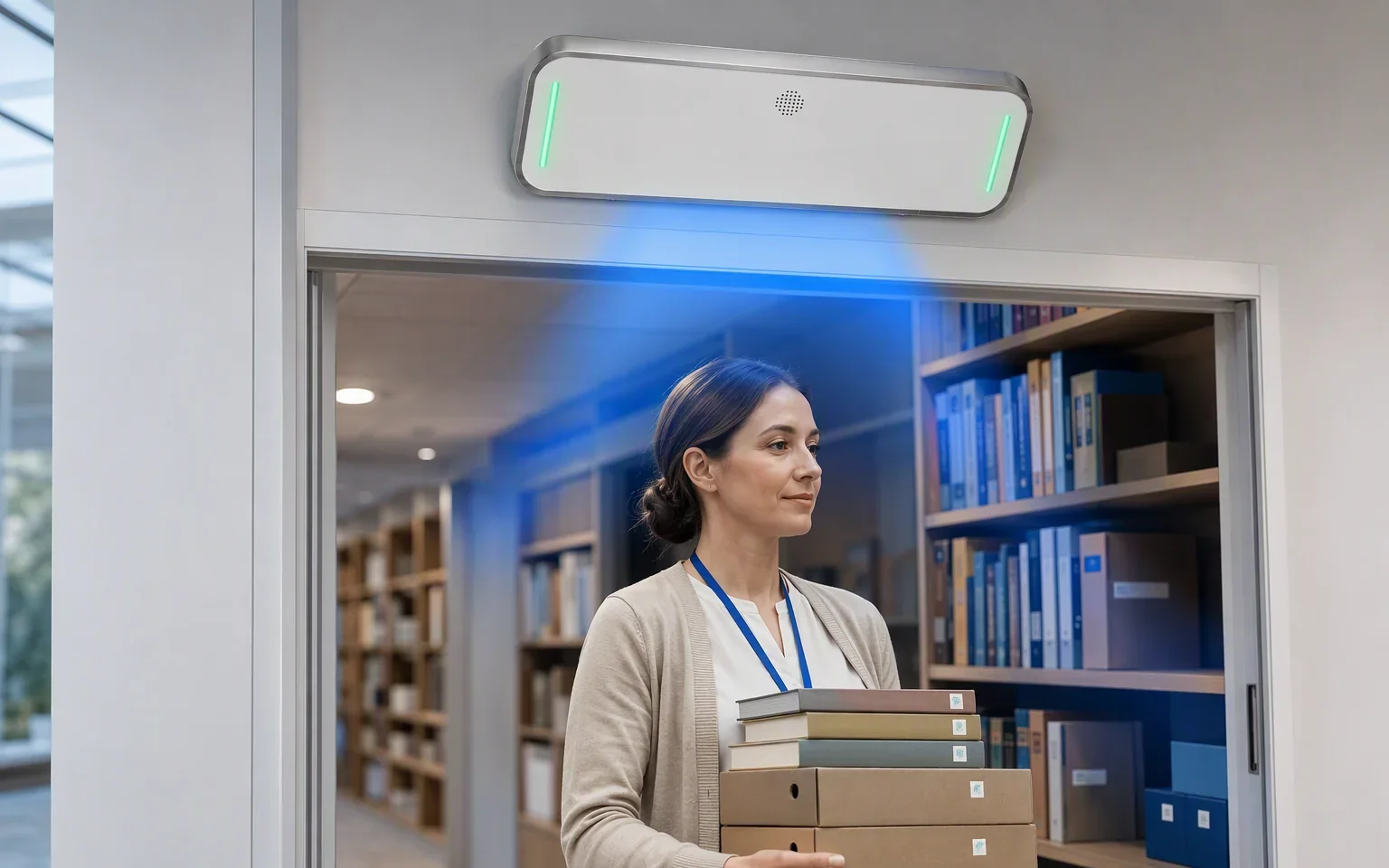
Libraries, Archives & Secure Asset Rooms
Record tagged books, files, tools, devices or controlled assets entering or leaving a defined room and compare the event with the approved transaction or authorization workflow.

Warehouse & Manufacturing Checkpoints
Capture tagged cartons, returnable containers, tools or work-in-process items at receiving areas, material rooms, production transitions or dispatch passages.

Deployment Guidance
Design the overhead read zone around the route, tag and trigger
The stated read distance is not the design target by itself. Build the monitoring point around the real mounting height, passage geometry, tag orientation, tagged material, sensor behavior and adjacent RFID zones.
Validate the complete event—from movement detection and RFID capture through local processing, alert behavior and system receipt—under the operating conditions expected at the site.
Define the asset route, passage width, installation surface, service access and the area that must remain outside the intended read zone.
Confirm the sensor option, antenna configuration, RF power, tag orientation and timing needed to capture the intended movement without excessive nearby reads.
Test the final protocol payload, duplicate handling, connection-loss behavior, recovery process, buzzer or external alarm and business-system response.

Specifications
RLC-100 RFID, edge-processing and installation specifications
The values below are transcribed from the supplied ceiling-reader document. Confirm the exact RLC-100 standard configuration, sensor option, antenna design, Android version, interfaces and installation hardware before publication or quotation.
| Edge Platform | Processor | Qualcomm 1.3 GHz quad-core processor |
|---|---|---|
| RFID Engine | Impinj R2000 / E710 or approved high-performance RFID chipset, depending on configuration | |
| RAM / Storage | 1 GB + 8 GB or 2 GB + 16 GB; additional Pro-series options require confirmation | |
| Operating System | Android 7.0 stated in the supplied document; confirm current shipping version | |
| OS Compatibility | Android standard series; Linux, Kirin or Harmony OS listed for selected Pro-series configurations | |
| AI Support | Listed for Pro-series configurations; exact functions and model availability require confirmation | |
| RFID Performance | Air Interface Protocol | ISO/IEC 18000-6C / EPC Class 1 Gen 2; GB/T 29768 and GJB 7377.1 support listed |
| Frequency Range | 865–868 MHz / 920–925 MHz / 902–928 MHz | |
| RF Output Power | 0–33 dBm adjustable | |
| Power Adjustment | 1 dB steps | |
| Stated Read Distance | Up to 3.5 m, depending on tag and antenna configuration | |
| Stated Read Rate | 400–1,000 tags per second; customizable and dependent on operating conditions | |
| Receiver Sensitivity | Stated value: less than -85 dBm | |
| Antenna Configuration | Customizable antenna specifications are listed; confirm the exact integrated antenna design, polarization, gain and beam pattern | |
| Detection & Alert | Movement Sensor | Infrared or radar sensing, depending on the selected configuration |
| Alarm | Infrared trigger and audible / buzzer alarm listed | |
| GPIO / I/O | Multiple GPIO and I/O ports listed; confirm channel count, electrical levels and pinout | |
| Remote Management | Online upgrades, remote power cycling and real-time monitoring listed | |
| Interfaces & Communication | Ethernet | 10/100 Mbps |
| Power | DC input; confirm voltage, connector and installation power requirements | |
| Optional Serial | 1 × RS-232 and 1 × TTL listed | |
| Optional USB | 2 × USB 2.0 Type-A and 1 × Type-C USB OTG listed | |
| Optional Video Output | HDMI, 720p | |
| Optional Wireless | 4G, BeiDou / GPS, Wi-Fi and Bluetooth | |
| Application Protocols | HTTP, MQTT, TCP and UDP | |
| Physical & Installation | Operating Temperature | -25 °C to +65 °C |
| Storage Temperature | -40 °C to +85 °C | |
| Humidity | 10%–95% | |
| Dimensions | 575 × 200 × 45 mm | |
| Weight | 3.5 kg | |
| Housing Material | CNC aluminum alloy | |
| Cooling | Air-cooled design | |
| Installation | Ceiling, wall or pole installation |
Publication gate: confirm the exact RFID engine, standard memory, current Android version, sensor option, antenna parameters, cache capacity, I/O definition, power specification, wireless and wired interfaces, IP rating and installation accessories before publishing this table as the final RLC-100 specification.
Support & Documentation
Technical resources for ceiling-reader integration and deployment

Product Datasheet
Review the processing platform, RFID performance, sensor options, communication interfaces, physical dimensions and installation methods.
Request datasheet →Protocol & Integration Guide
Request HTTP, MQTT, TCP and UDP documentation, sample payloads, Android integration resources and remote-management guidance.
Request integration guide →Read-Zone & Installation Review
Discuss mounting height, tagged items, movement path, sensor behavior, RF coverage, adjacent zones, alarm logic and system ownership.
Discuss deployment →Deployment FAQ
RLC-100 ceiling-reader, sensor and read-zone questions
How is RLC-100 different from a conventional fixed RFID reader?
RLC-100 is designed as an overhead or wall-mounted monitoring terminal that combines UHF RFID reading, Android-based edge processing, local caching, network protocols and a configurable infrared or radar sensing option. A conventional fixed reader may require separately positioned antennas and external event-processing software.
Is the stated read distance of up to 3.5 m guaranteed?
No. The supplied document states up to 3.5 m depending on the tag and antenna configuration. Actual performance depends on mounting height, tag type, tagged material, orientation, RF power, surrounding metal, movement path, interference and the required read-zone boundary.
Can RLC-100 locate the exact position of every tagged item?
The supplied information supports RFID zone monitoring and asset-movement workflows, not precise real-time coordinates. Exact location, person-to-item association or RTLS functions require additional confirmed hardware, algorithms and system design.
Are infrared and radar sensors both included?
The supplied document states infrared or radar sensing. Confirm whether the quoted RLC-100 configuration uses infrared, radar or another sensor option and whether the function is standard or optional.
Can the reader support unauthorized-movement alerts?
It can support an RFID-based alert workflow using movement sensing, tag capture, local logic, audible or buzzer output and a connected application. The final authorization rules, transaction data and alarm escalation remain part of the project software and system design.
Can RFID events be sent to WMS, MES, security or IoT platforms?
The supplied information lists HTTP, MQTT, TCP and UDP. These protocols can be used in a project-specific integration layer, but this page does not claim a native connector for every WMS, MES, security or IoT platform.
What happens if the network connection is interrupted?
The supplied information states that event data can be cached during connection loss and transmitted automatically after connectivity returns. Confirm the exact cache capacity, retention time, retry order and duplicate-control behavior for the selected configuration.
Does RLC-100 support Wi-Fi, Bluetooth, 4G or positioning?
These functions are listed as optional. Confirm the required wireless module, antenna, regional bands, SIM requirements and positioning option before ordering.
How can RLC-100 be installed?
The supplied specifications list ceiling, wall and pole installation. The final bracket, mounting surface, service clearance, cable route, safety retention and structural support should be reviewed for the project.
Can the reader be installed outdoors?
The supplied document provides temperature and humidity values but does not state an IP rating. Do not assume outdoor suitability until the final enclosure rating, sealing, condensation, UV and installation protection are confirmed.
What should be confirmed before ordering?
Confirm the RFID engine, memory, Android version, sensor option, antenna parameters, mounting height, tagged items, read-zone boundary, cache requirement, protocol payload, alarm behavior, I/O, power, wireless options, installation hardware and operating environment.
Project Review
Confirm the RLC-100 configuration for your overhead RFID zone
Share the tagged items, entrance or room layout, mounting height, passage width, sensor requirement, expected movement, read-zone boundary, alert workflow, network condition, business system, operating region and project quantity.