
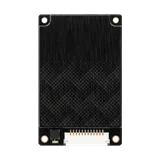
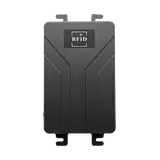
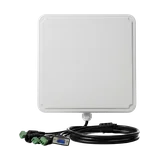
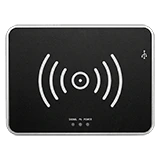
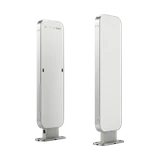

All-in-one UHF RFID read points
Integrated RFID Readers
Raylink integrated RFID readers combine the reader and antenna in one enclosure for permanent read points at production, logistics, access-control and equipment workflows.
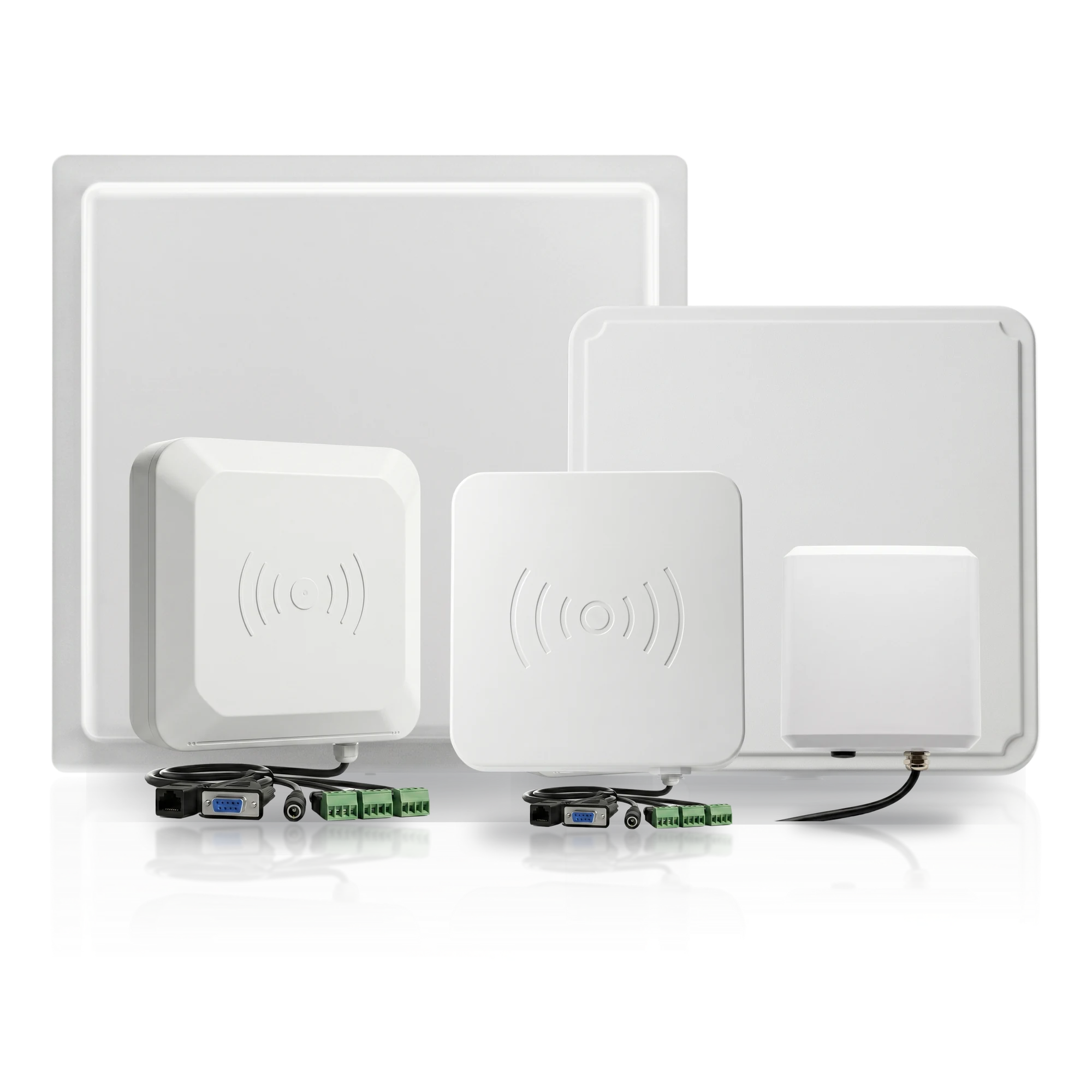
Integrated RFID reader family
Choose the antenna gain for the actual read point
Compare 6, 7, 8, 9 and 12 dBi integrated readers according to read distance, mounting geometry, tagged-object movement, regional frequency and host-control requirements.
Product lineup
Integrated RFID Readers
Start with the required read-point distance and boundary, then confirm antenna gain, mounting angle, tagged-object behavior, communication, I/O and PoE before selecting a model.
Built-in antenna readers
One-Piece UHF RFID Read Points from 6 to 12 dBi
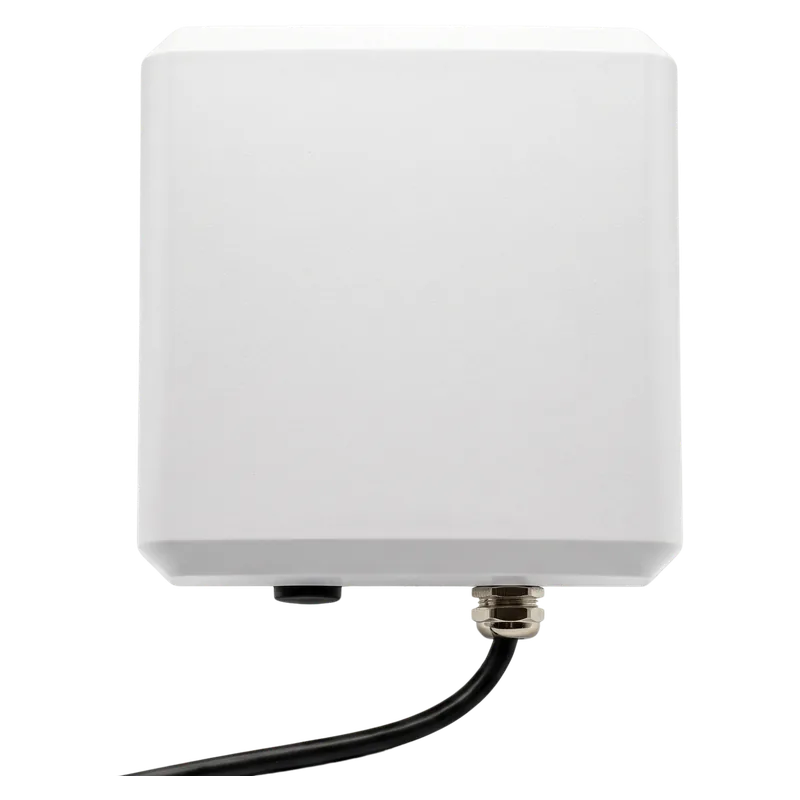
Compact 6 dBi integrated reader
RLI-6dBi Integrated UHF RFID Reader
A compact all-in-one reader with a built-in 6 dBi circularly polarized antenna for controlled fixed RFID read points.
- Typical maximum read range up to 6 m under stated test conditions
- 2 optocoupler inputs and 2 relay outputs support process control
- PoE is not supported; confirm serial and optional communication configuration
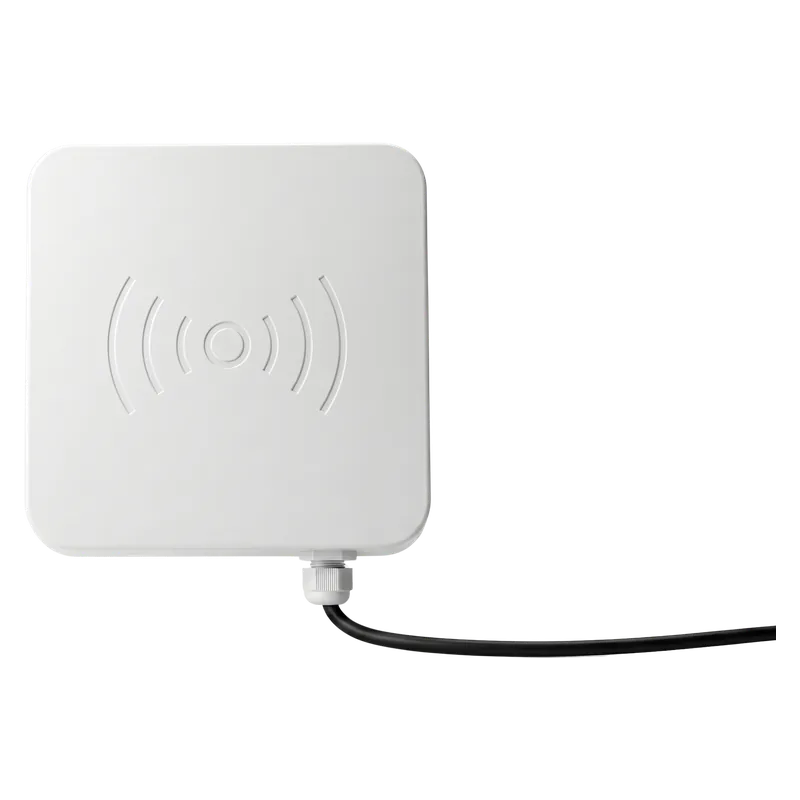
Balanced 7 dBi integrated reader
RLI-7dBi Integrated UHF RFID Reader
A 7 dBi integrated reader for projects that need an intermediate antenna-gain option between compact and extended read-point designs.
- Combines the reader and built-in antenna in one enclosure
- PoE is available by project configuration
- Confirm regional frequency, mounting position and actual read boundary
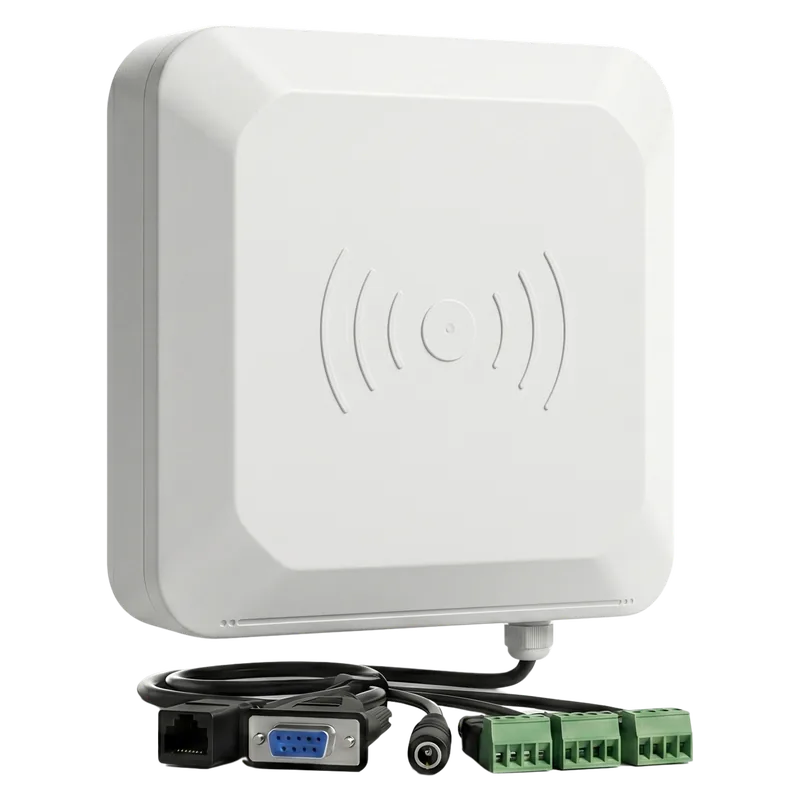
Extended 8 dBi integrated reader
RLI-8dBi Integrated UHF RFID Reader
A medium-to-long-range integrated reader with a built-in 8 dBi circularly polarized antenna for permanent RFID read points.
- Typical maximum read range up to 10 m under stated test conditions
- PoE is available as an optional configuration
- Supports 38400 / 57600 / 115200 bps and regional frequency configuration
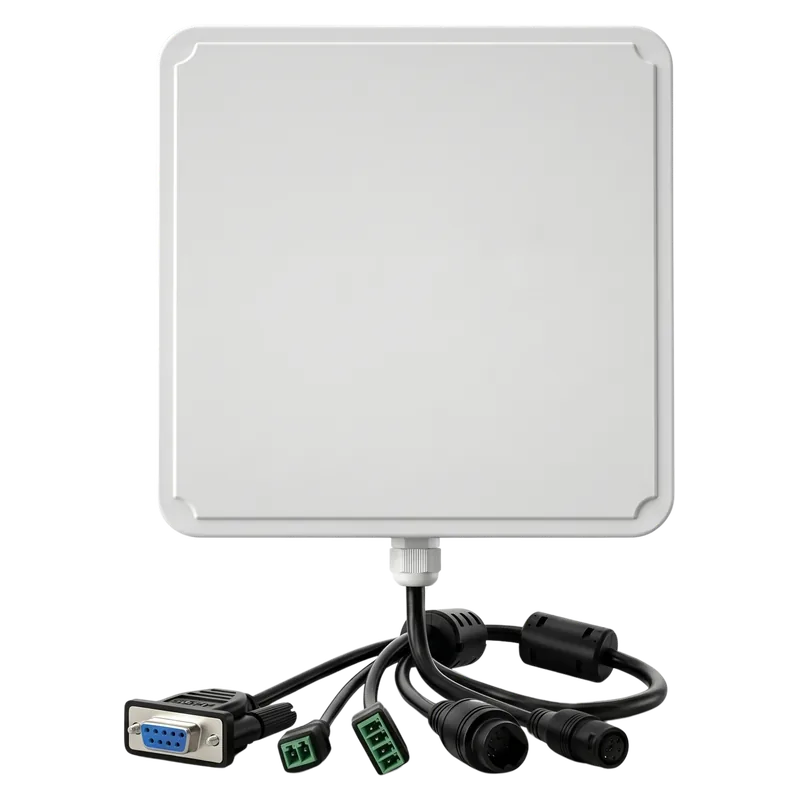
Higher-gain 9 dBi integrated reader
RLI-9dBi Integrated UHF RFID Reader
A higher-gain integrated reader for extended fixed read points where antenna direction, tagged-object movement and adjacent read zones must be planned together.
- Built-in 9 dBi antenna reduces separate reader-and-antenna components
- PoE is available by project configuration
- Validate the actual distance, mounting angle and unwanted-read boundary
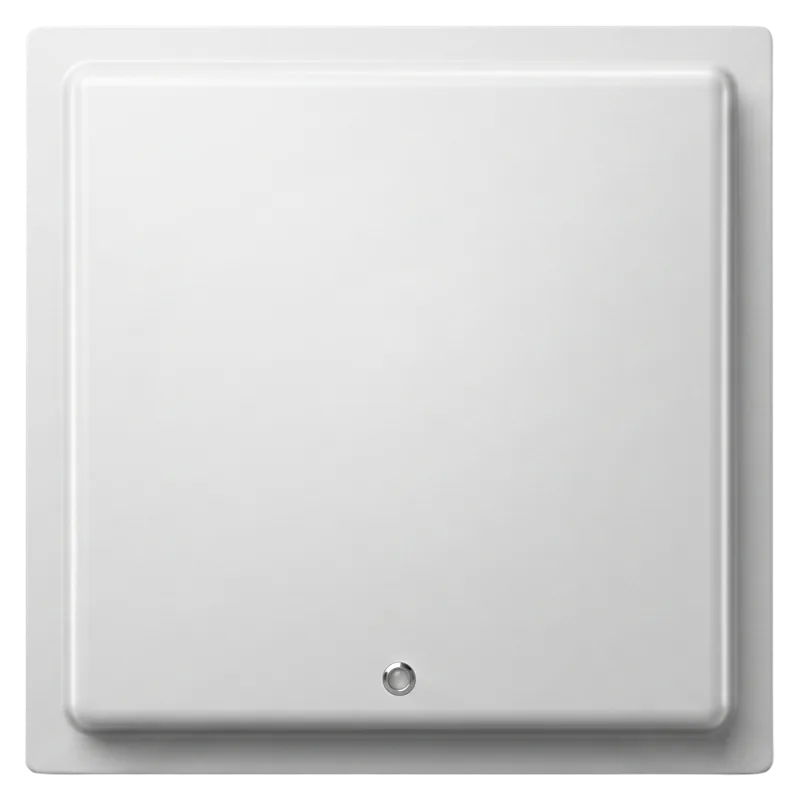
High-gain 12 dBi integrated reader
RLI-12dBi Integrated UHF RFID Reader
A high-gain integrated reader for extended-distance fixed read points that need the reader and antenna installed as one unit.
- Built-in 12 dBi antenna for high-gain read-point configurations
- PoE is available by project configuration
- Confirm mounting angle, tag performance, adjacent zones and site conditions
Reader comparison
Compare Integrated RFID Reader Gain and Deployment Fit
A higher antenna-gain value does not automatically mean a better read point. Compare the intended distance, read-zone shape, mounting and control requirements together.
| Model | Antenna gain | Reference range | PoE | Best for | What to confirm |
|---|---|---|---|---|---|
| RLI-6dBi | 6 dBi | Up to 6 m* | Not supported | Compact controlled read points | Tag, object, serial connection, I/O and installation conditions |
| RLI-7dBi | 7 dBi | Project dependent | Available by configuration | Balanced fixed read-point layouts | Regional frequency, PoE, mounting angle and actual boundary |
| RLI-8dBi | 8 dBi | Up to 10 m* | Optional | Medium-to-long fixed read points | Tag, object, PoE option, baud rate and site conditions |
| RLI-9dBi | 9 dBi | Project dependent | Available by configuration | Extended fixed read points | Distance, antenna direction, movement and adjacent read zones |
| RLI-12dBi | 12 dBi | Project dependent | Available by configuration | High-gain extended-distance read points | Mounting angle, tag performance, unwanted reads and site validation |
*Reference maximums are conditional values. Actual UHF RFID range depends on the tag, tagged object, orientation, output settings, mounting and RF environment.
Selection logic
What to Confirm Before Choosing an Integrated RFID Reader
Treat gain, distance, read boundary, mounting, tag performance and control interfaces as one read-point configuration.
Read-point role
Define whether the reader will monitor a station, conveyor, doorway, vehicle lane, machine or controlled access point.
Gain and distance
Choose antenna gain according to the intended read distance and zone shape, not by selecting the highest value automatically.
Mounting geometry
Confirm height, angle, orientation, available space and the direction in which tagged objects approach the read point.
Tag and object
Test the actual tag model, mounting material, position, orientation, movement and expected number of tags.
Host, I/O and PoE
Confirm communication, baud rate, trigger, relay, power and PoE requirements for the selected model.
Site validation
Validate actual distance, movement, nearby materials, adjacent read zones and unwanted-read boundaries before rollout.
Integrated read-point workflows
Build One-Piece RFID Read Points Around the Installation
Use an integrated reader when the reader and antenna should be mounted as one enclosure at a defined operating point.
Production and verification stations
Capture tagged components, tools or products and return the result to the production or validation system.
Warehouse and logistics checkpoints
Identify tagged cartons, pallets or assets at receiving, shipping, staging and controlled material-flow points.
Vehicle access and controlled entry
Configure higher-gain integrated readers for vehicle, parking or access workflows after read-boundary and site validation.
FAQ
Integrated RFID Reader Questions
What is an integrated RFID reader?
An integrated RFID reader combines the UHF RFID reader and antenna in one enclosure, reducing the need to install a separate external antenna at the read point.
How do I choose between 6, 7, 8, 9 and 12 dBi?
Start with the intended distance, mounting geometry and read boundary. Then validate the selected gain with the actual tag, object, movement and site conditions.
Does a higher dBi value always provide a better result?
No. Higher gain can change the usable read-zone shape and direction. The best result depends on the installation, tag performance and unwanted-read boundary.
Which integrated reader models support PoE?
RLI-6dBi does not support PoE. PoE is available by configuration on the 7, 8, 9 and 12 dBi models and should be confirmed before quotation.
What read distance should I expect?
RLI-6dBi has a stated typical maximum up to 6 m and RLI-8dBi up to 10 m under test conditions. Other models and real sites require project validation.
What should be tested before deployment?
Test the reader, tag, object, regional frequency, mounting position, movement, communication, power, I/O and adjacent read zones together.
Project guidance
Need Help Choosing an Integrated RFID Reader?
Send the intended distance, tagged object, movement, mounting position, regional frequency, communication, I/O and PoE requirements.