

UHF RFID reader systems
Fixed RFID Readers
Raylink fixed RFID readers connect external antennas and host systems to automate tag capture at production lines, warehouse points, controlled workstations and specialized operating environments.
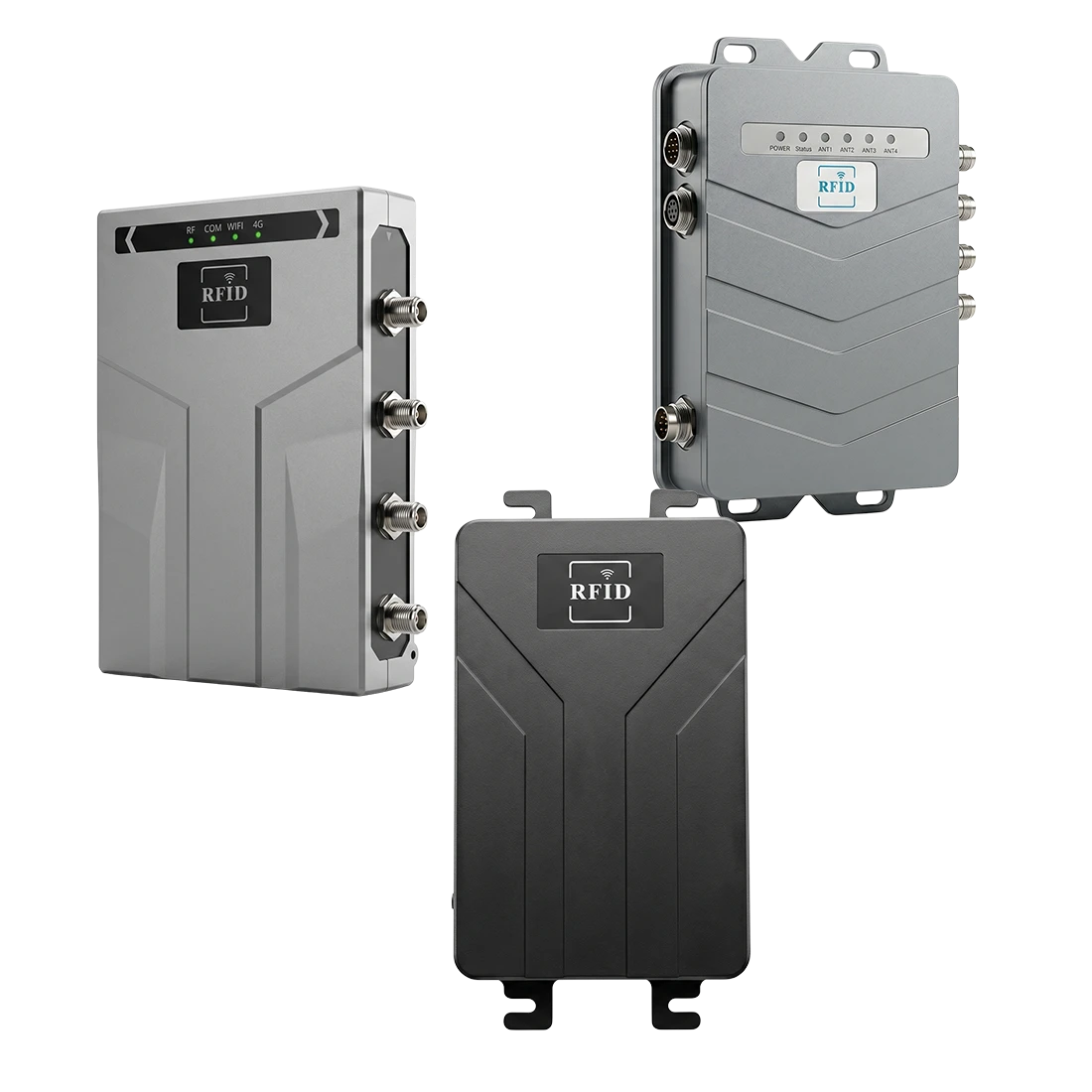
FIXED RFID READER FAMILIES
Choose standard, Android and specialized fixed RFID readers
Compare standard multi-port readers, Android reader configurations, ceiling readers and forklift readers according to the host architecture and deployment point.
Product lineup
Fixed RFID Readers
Compare the reader architecture first, then confirm antenna count, tagged-object movement, read boundaries and host integration before selecting a model.
Standard multi-port readers
Host-Controlled Fixed RFID Readers
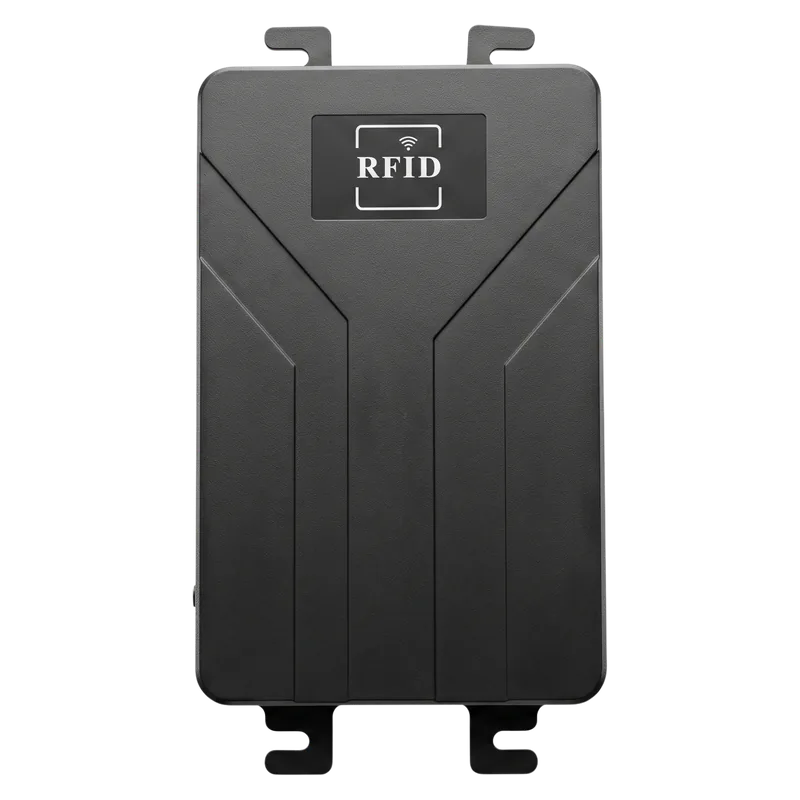
4-port host-controlled reader
RLF-4P 4 Ports Fixed RFID Reader
A standard fixed reader for compact installations that use up to four external antenna positions and a connected host system.
- Supports up to four external antenna positions
- Suitable for compact portals, stations and cabinets
- Host communication and I/O requirements should be confirmed
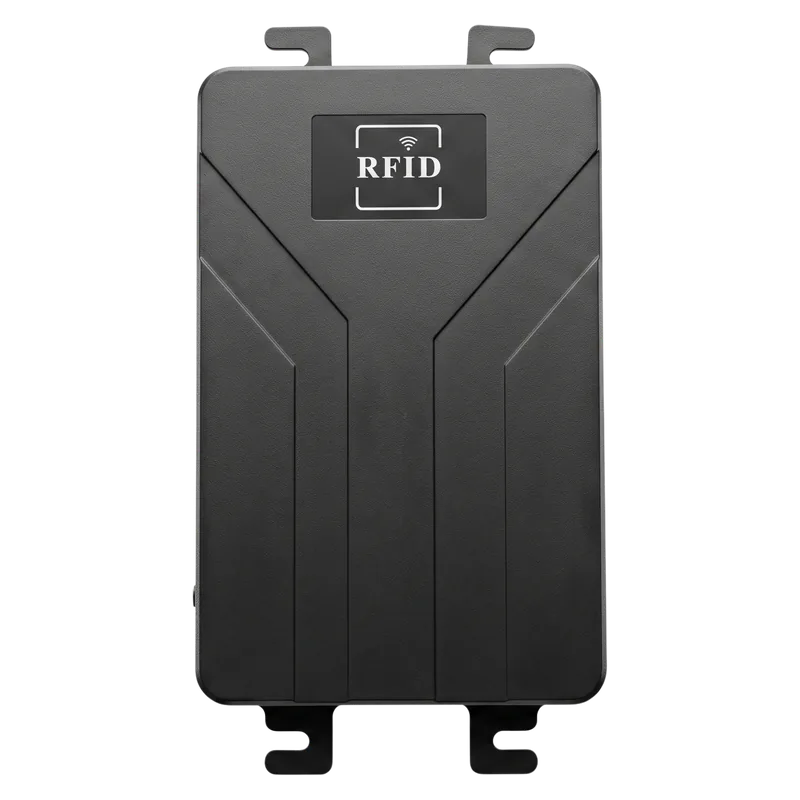
8-port host-controlled reader
RLF-8P 8 Ports Fixed RFID Reader
A standard multi-port reader for broader antenna layouts across lanes, shelves, work areas or multiple controlled read points.
- Supports up to eight external antenna positions
- Useful when one controller serves several read zones
- Requires antenna sequencing and read-boundary planning
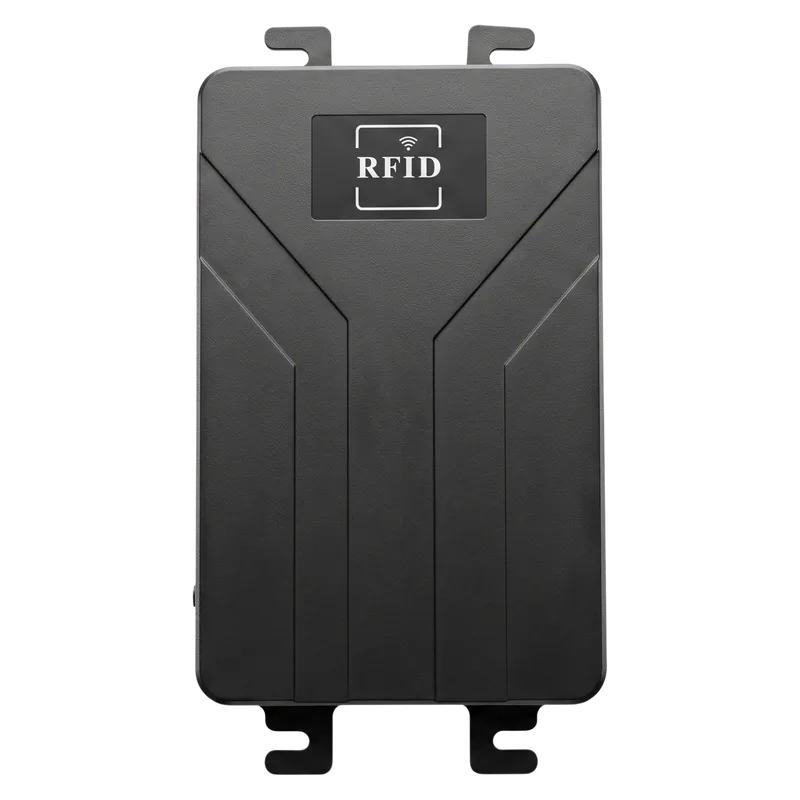
16-port host-controlled reader
RLF-16P 16 Ports Fixed RFID Reader
A high-density fixed reader for systems that coordinate many external antenna positions through one controller.
- Supports up to sixteen external antenna positions
- Suitable for dense cabinets and multi-zone systems
- Timing, filtering and controller load require validation
Android multi-port readers
Android Edge RFID Readers
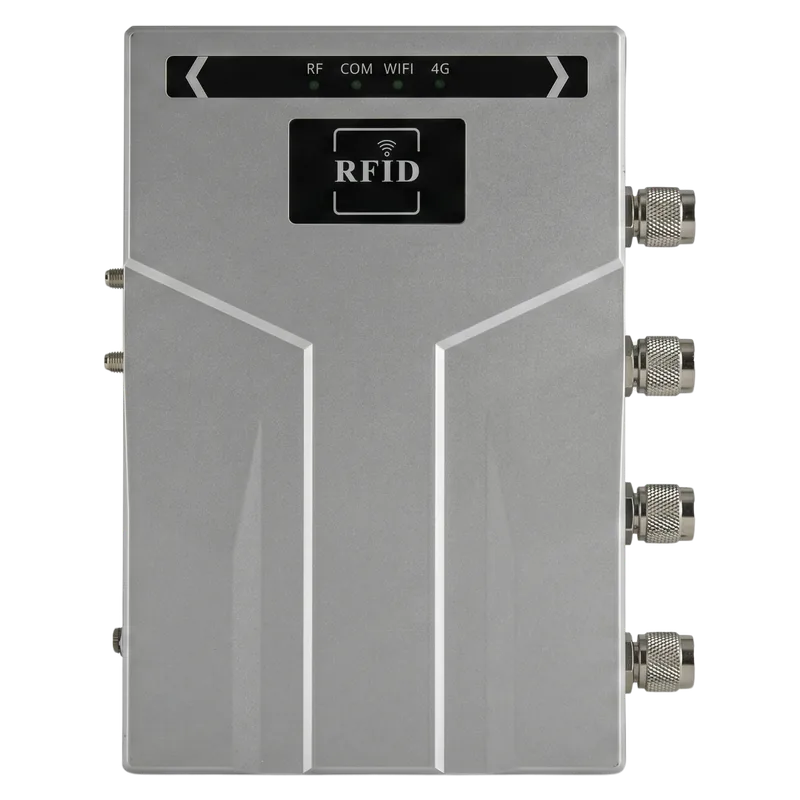
4-port Android reader
RLF-4PA 4 Ports Android RFID Reader
An Android edge reader for compact four-antenna deployments that need local application logic before data is synchronized with the host.
- Runs an Android application at the read point
- Buffers tag events locally and applies allowlist/blocklist rules
- Supports up to four external antenna positions
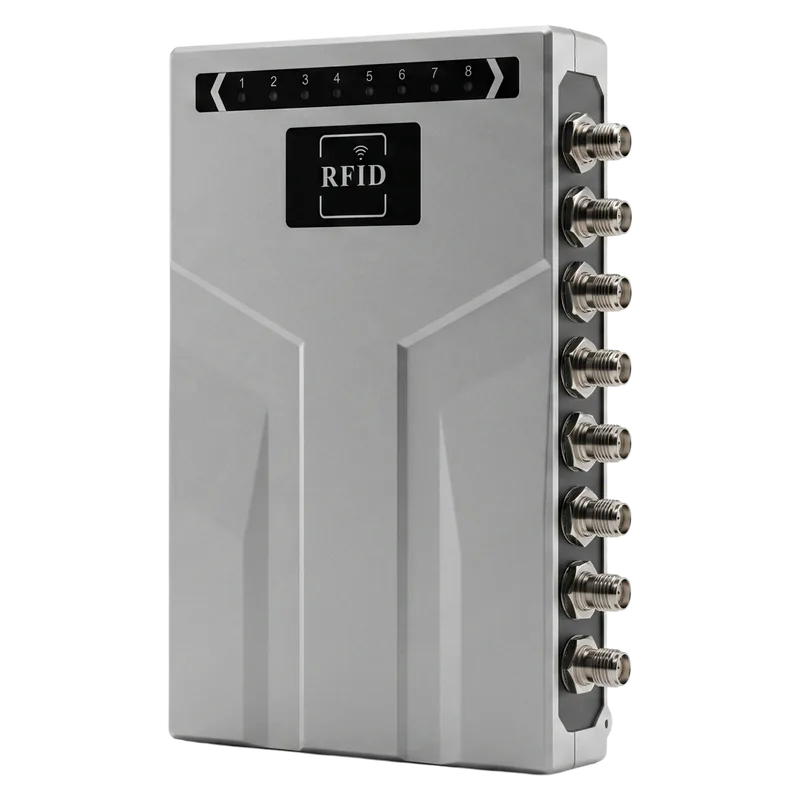
8-port Android reader
RLF-8PA 8 Ports Android RFID Reader
An Android edge reader for larger multi-antenna layouts that need local filtering, event buffering and host synchronization.
- Processes tag events and workflow rules in the local Android environment
- Supports local cache and allowlist/blocklist filtering
- Supports up to eight external antenna positions
16-port Android reader
RLF-16PA 16 Ports Android RFID Reader
An Android edge reader for dense multi-zone deployments that need local rule execution across many antenna positions.
- Runs the application and RFID workflow logic on the reader
- Supports local cache and allowlist/blocklist processing
- Supports up to sixteen antenna positions; validate processing load and timing
Specialized fixed readers
Readers Designed Around the Installation Environment
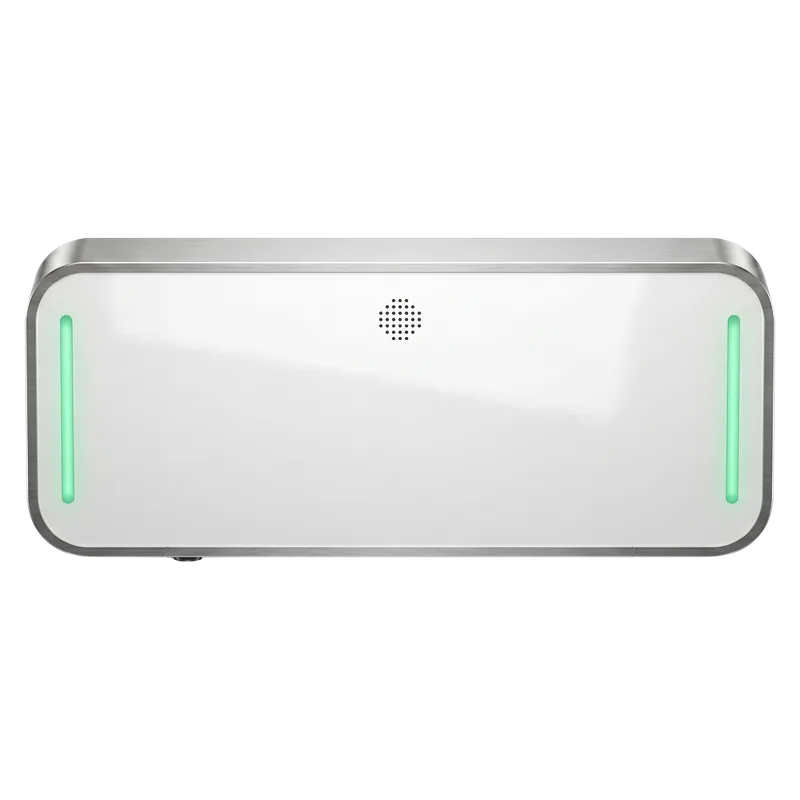
Overhead RFID reader
RLC-100 Ceiling RFID Reader
A purpose-built reader for overhead installation above a defined monitored area without occupying floor or counter space.
- Designed for ceiling or overhead mounting
- Supports area-oriented tag capture workflows
- Mounting height and adjacent-zone behavior require validation
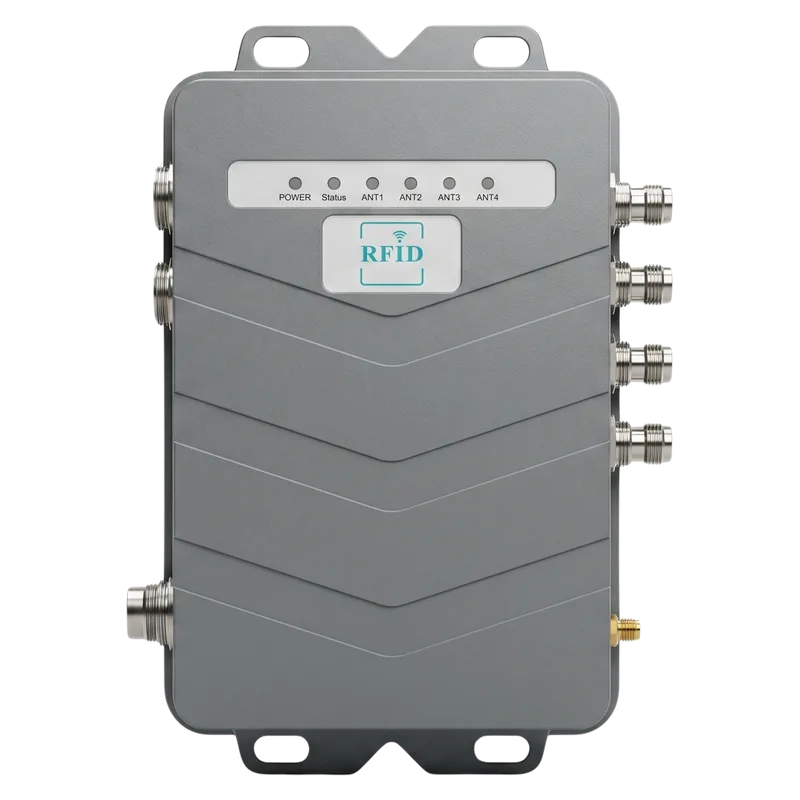
Vehicle-mounted RFID reader
RLFL-4P Forklift RFID Reader
A purpose-built reader for connecting RFID identification with forklift handling, pallet movement and load workflows.
- Designed for vehicle-mounted deployments
- Supports pallet, load or location identification projects
- Power, trigger, vibration and connectivity require validation
Reader comparison
Compare Fixed RFID Reader Architectures
Compare standard, Android and specialized readers in one table, then validate the actual antenna layout, software workflow and installation conditions.
| Category | Model | Ports / mounting | Processing architecture | Best for | What to confirm |
|---|---|---|---|---|---|
| Standard | RLF-4P | 4 antenna ports | External host / middleware | Compact portals, cabinets and stations | Interfaces, I/O and antenna layout |
| Standard | RLF-8P | 8 antenna ports | External host / middleware | Several read points or broader layouts | Sequencing and read-zone separation |
| Standard | RLF-16P | 16 antenna ports | External host / middleware | Dense multi-zone antenna systems | Timing, filtering and controller load |
| Android | RLF-4PA | 4 antenna ports | Android app, local cache, allowlist/blocklist | Compact edge-controlled read points | OS version, cache capacity, APIs and sync behavior |
| Android | RLF-8PA | 8 antenna ports | Android app, local cache, allowlist/blocklist | Expanded multi-point edge systems | App load, antenna switching and host synchronization |
| Android | RLF-16PA | 16 antenna ports | Android app, local cache, allowlist/blocklist | Dense multi-zone local control | Processing load, cache capacity, timing and software logic |
| Specialized | RLC-100 | Overhead mounting | Deployment-specific reader workflow | Area-oriented tag capture | Mounting height, coverage and adjacent zones |
| Specialized | RLFL-4P | Vehicle mounting | Vehicle-triggered RFID workflow | Load and location identification | Power, vibration, trigger and connectivity |
Selection logic
What to confirm before choosing a fixed RFID reader
Confirm the reader architecture, antenna layout, tagged-object movement, read boundary and host-control path before selecting the model.
Reader architecture
Choose standard host-controlled, Android, ceiling-mounted or forklift-mounted reader architecture before comparing port count.
Antenna count
Map the actual antenna positions before choosing a 4, 8 or 16-port reader.
Tagged object and movement
Review tag orientation, object material, travel direction, speed and the expected number of tags in each event.
Read-zone boundary
Define where tags should be captured and where nearby tags must be excluded.
Communication and control
Confirm the required host communication, trigger, I/O, power and software-integration path for the selected model.
Pilot validation
Test the reader, antenna, tag, mounting position, trigger logic and host software together before rollout.
Where fixed readers fit
Connect RFID capture to permanent operating points
Fixed readers are most useful when tag capture must operate repeatedly at a defined station, route or equipment position.
Production and verification stations
Capture tagged components, tools or products and return the result to the production or validation system.
Warehouse and logistics points
Identify tagged cartons, pallets or assets at receiving, shipping, staging and material-handling locations.
Controlled zones and mobile equipment
Extend RFID capture to overhead monitoring areas or vehicle-mounted workflows after site validation.
Review UHF RFID antennas →FAQ
Fixed RFID reader questions
Use these questions to distinguish reader architecture, antenna-port count and deployment requirements before requesting a configuration.
What is a fixed RFID reader?
A fixed RFID reader is a complete reader controller installed at a permanent operating point and usually connected to one or more external RFID antennas.
How is a fixed reader different from an integrated reader?
A fixed reader normally connects to external antennas, while an integrated reader combines the reader and antenna in one enclosure.
How many antenna ports do I need?
Start with the actual number of antenna positions. Also confirm how antennas should be switched or sequenced according to the workflow.
Does a higher antenna-port count increase read distance?
No. Port count determines how many antenna positions can be connected. Read distance depends on reader output, antenna, tag, mounting and the RF environment.
Which antenna should be used with a fixed reader?
Select the antenna according to polarization, gain, read-zone shape, mounting direction, environment and the tagged object.
What should be tested before deployment?
Test the actual reader, antenna, tag, object, movement, trigger source, mounting position and software logic at the intended site.
Project guidance
Need help configuring a fixed RFID reader system?
Send the number of read points, antenna layout, tagged object, movement, required interfaces and host-system workflow. Raylink can review the reader and antenna path before quotation.