
Portable USB UHF RFID Reader
RLU-01 Portable USB UHF RFID Reader
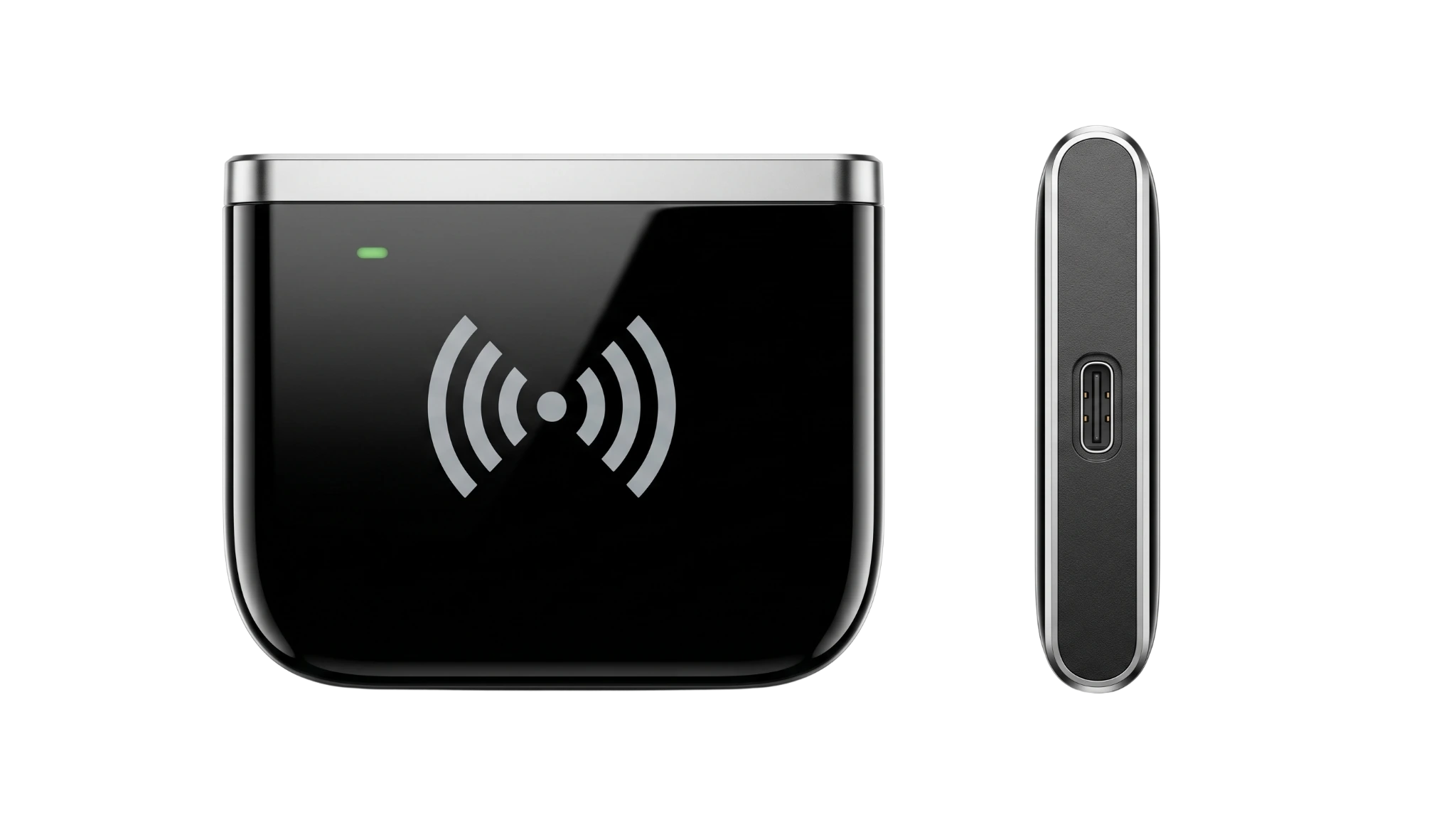
Add UHF RFID verification to a compatible phone, tablet, or computer with a 37 g reader that connects through USB Type-C and supports OTG workflows.
Confirm host compatibility, regional frequency, target tags, working position, and application behavior before deployment.
Why Use RLU-01?
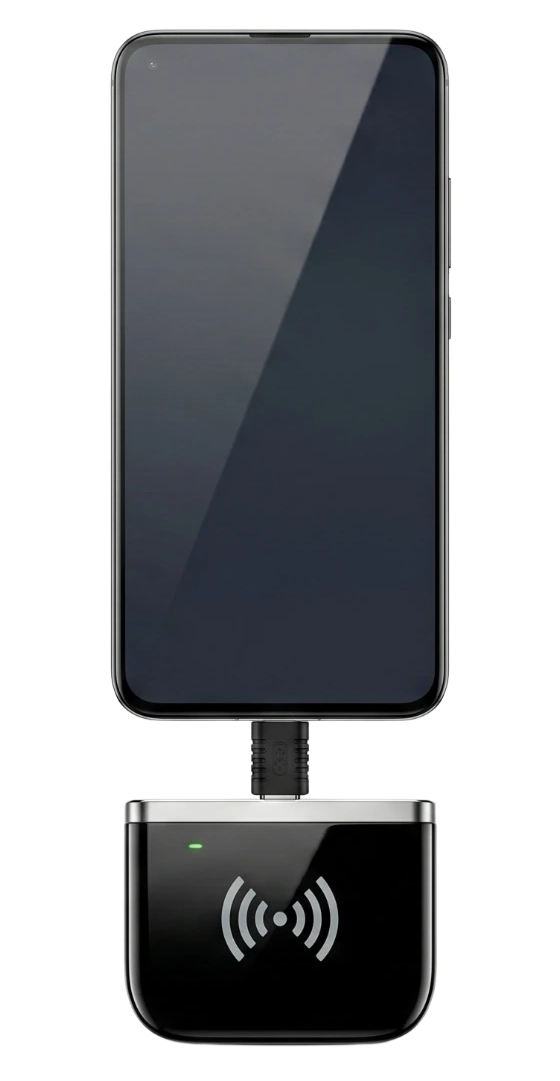
Put UHF RFID verification in a pocket-sized USB accessory
RLU-01 is built for teams that need a compact reader beside an existing mobile device or workstation for targeted UHF tag tasks.

Carry it with the host device
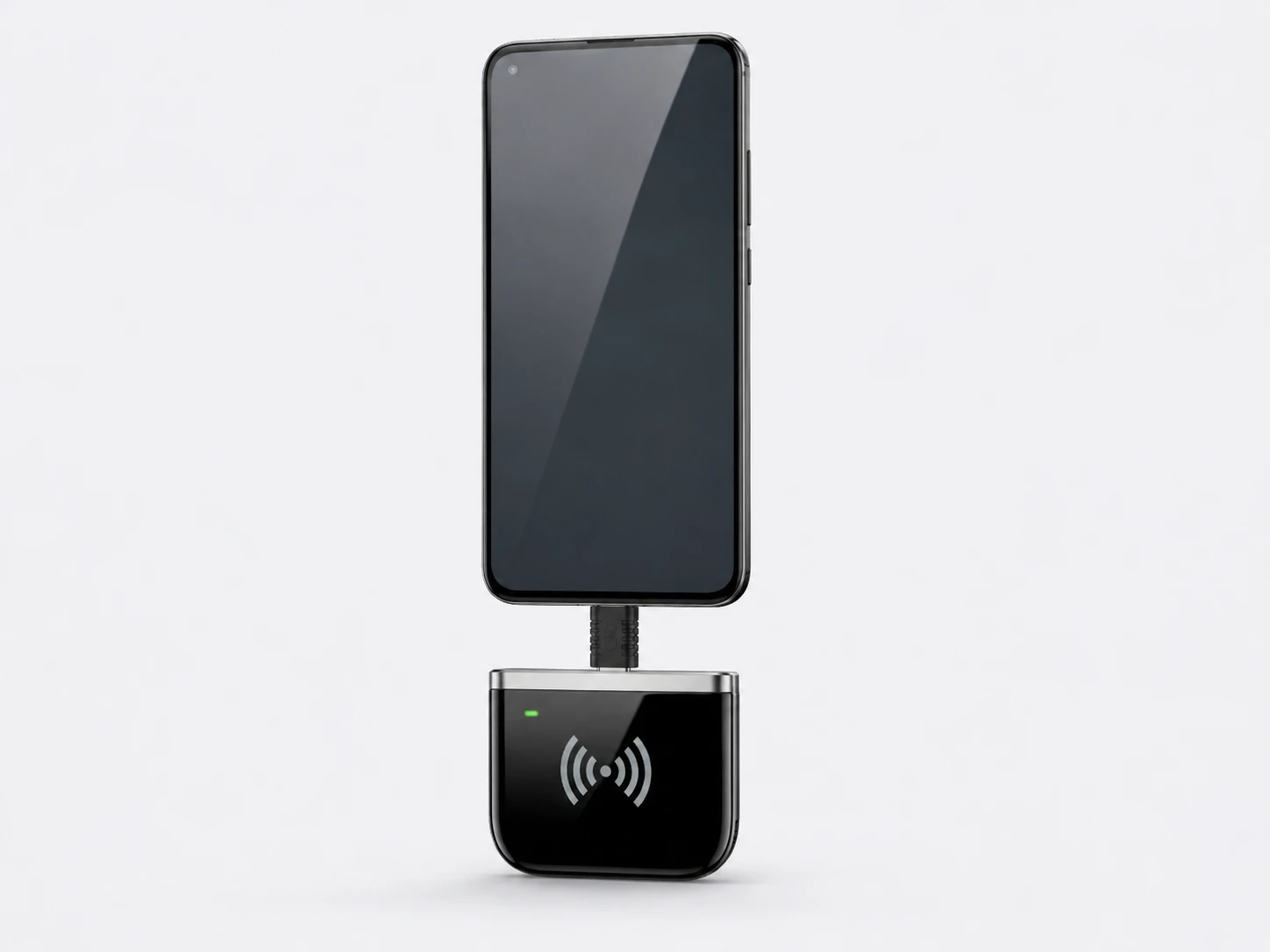
At 37 g and roughly one-quarter the size of a smartphone, the reader fits mobile inspection and field-support kits.
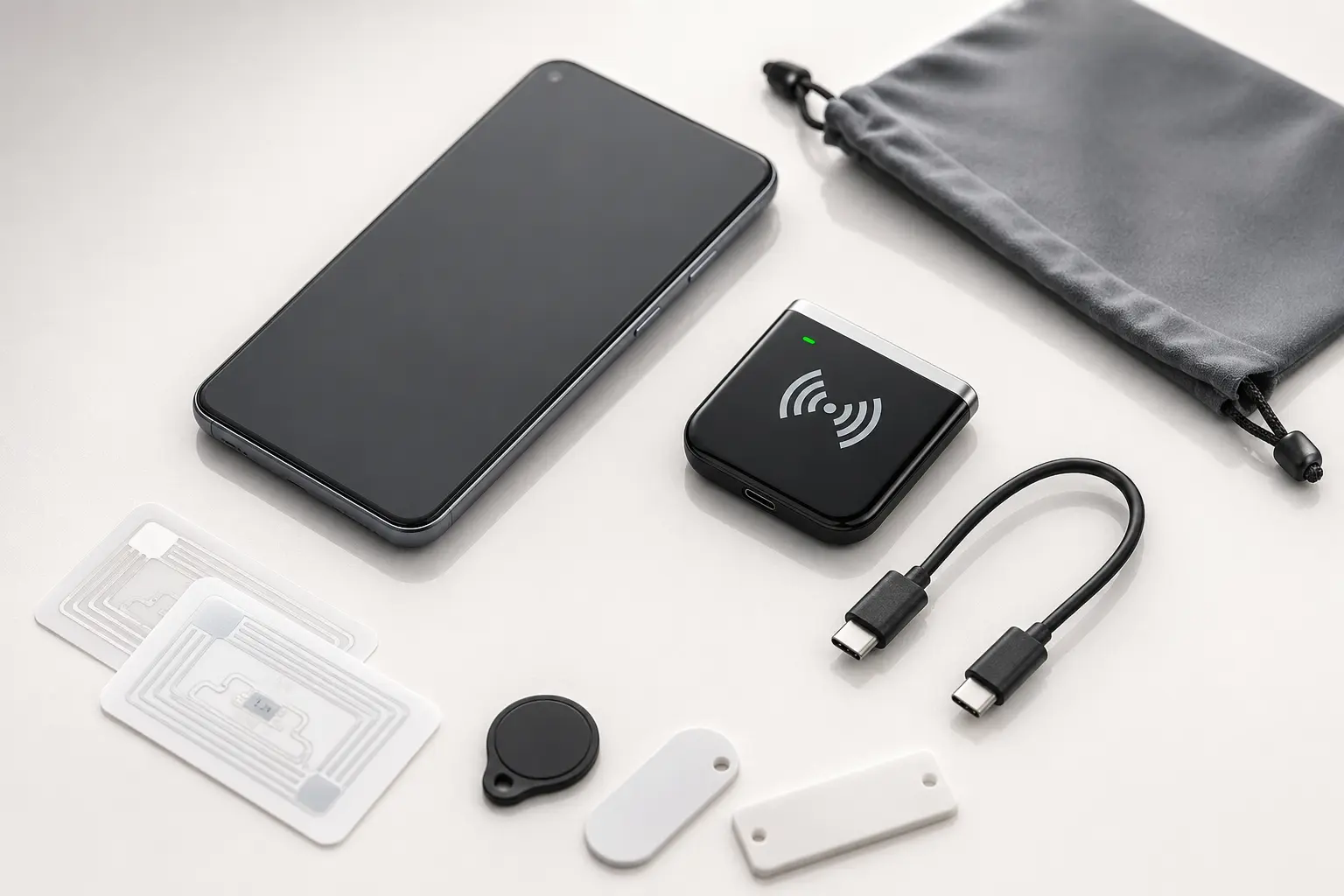

Connect through USB Type-C
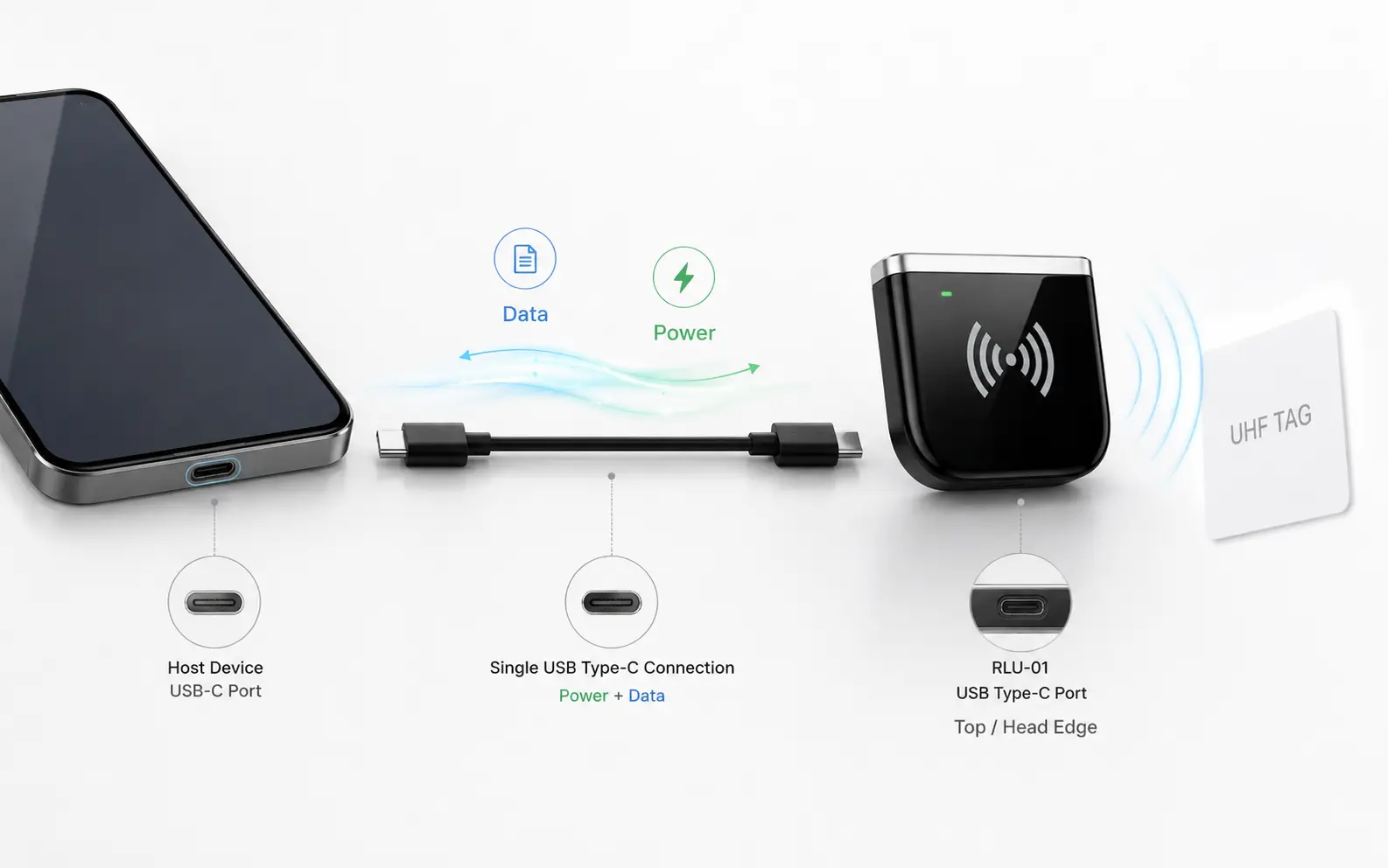
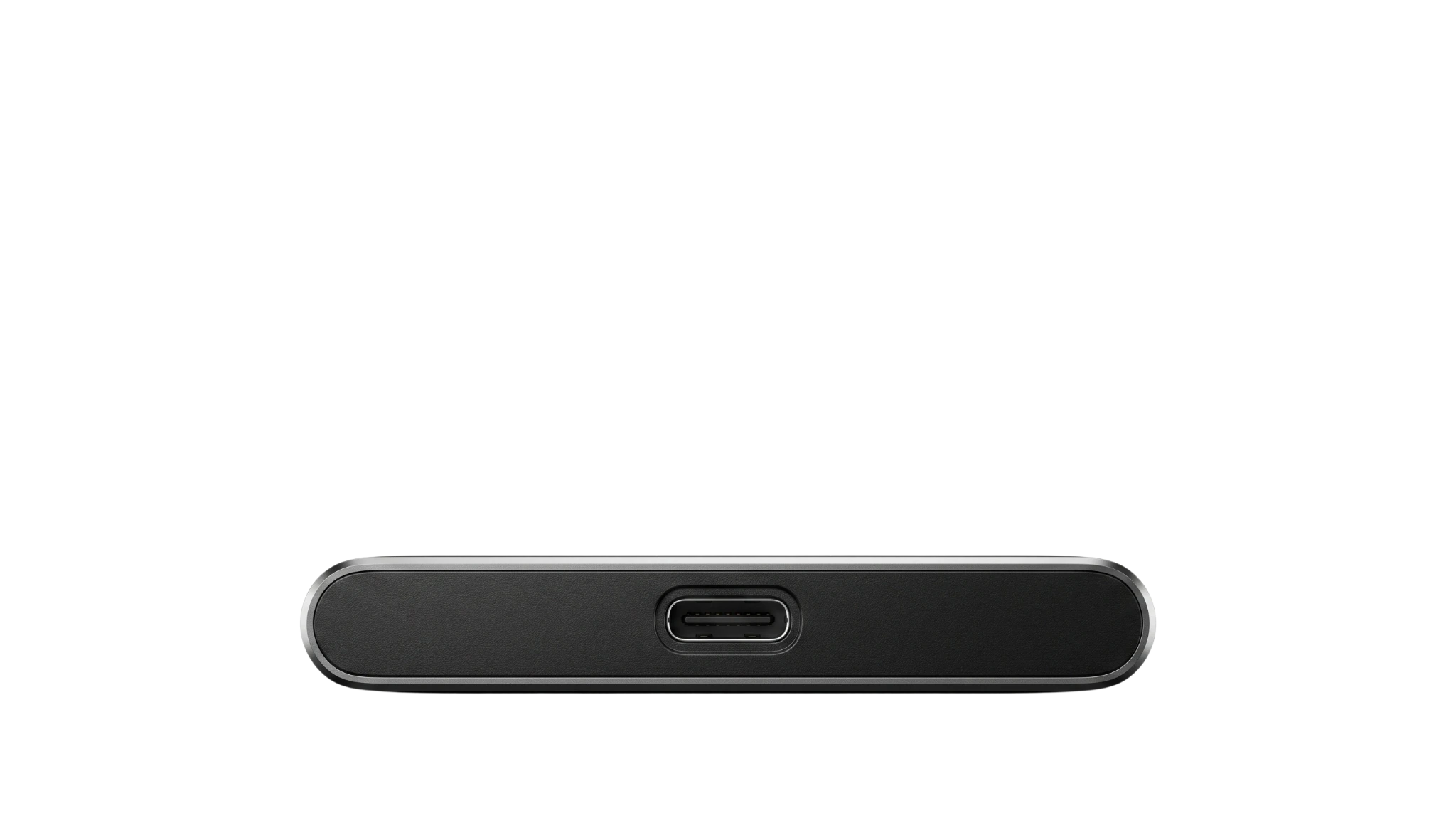
Use USB Type-C for power and communication, with OTG support for compatible mobile hosts.
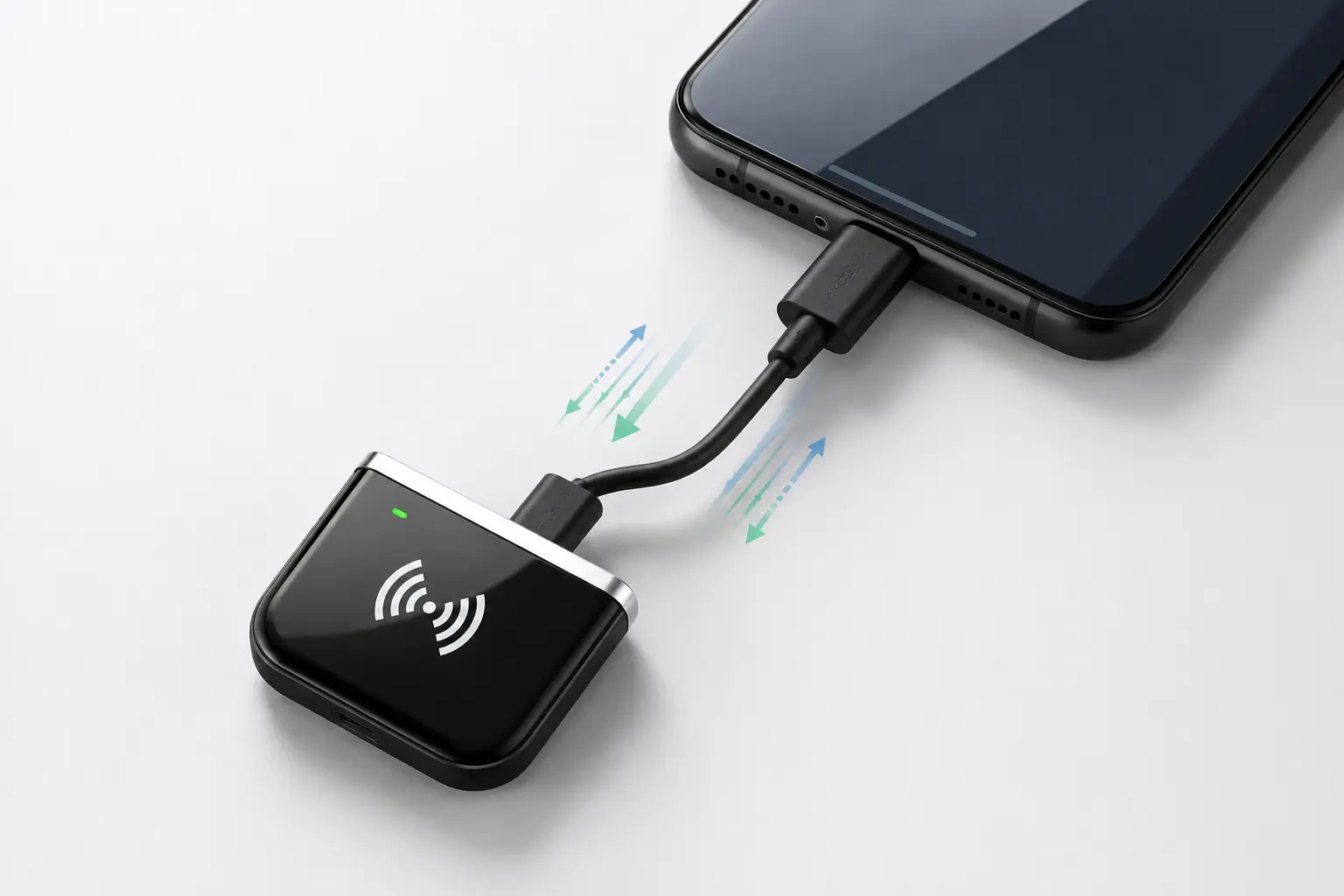

Add RFID without a large workstation
The integrated reader, antenna, and USB-powered design support compact verification stations and portable tools.
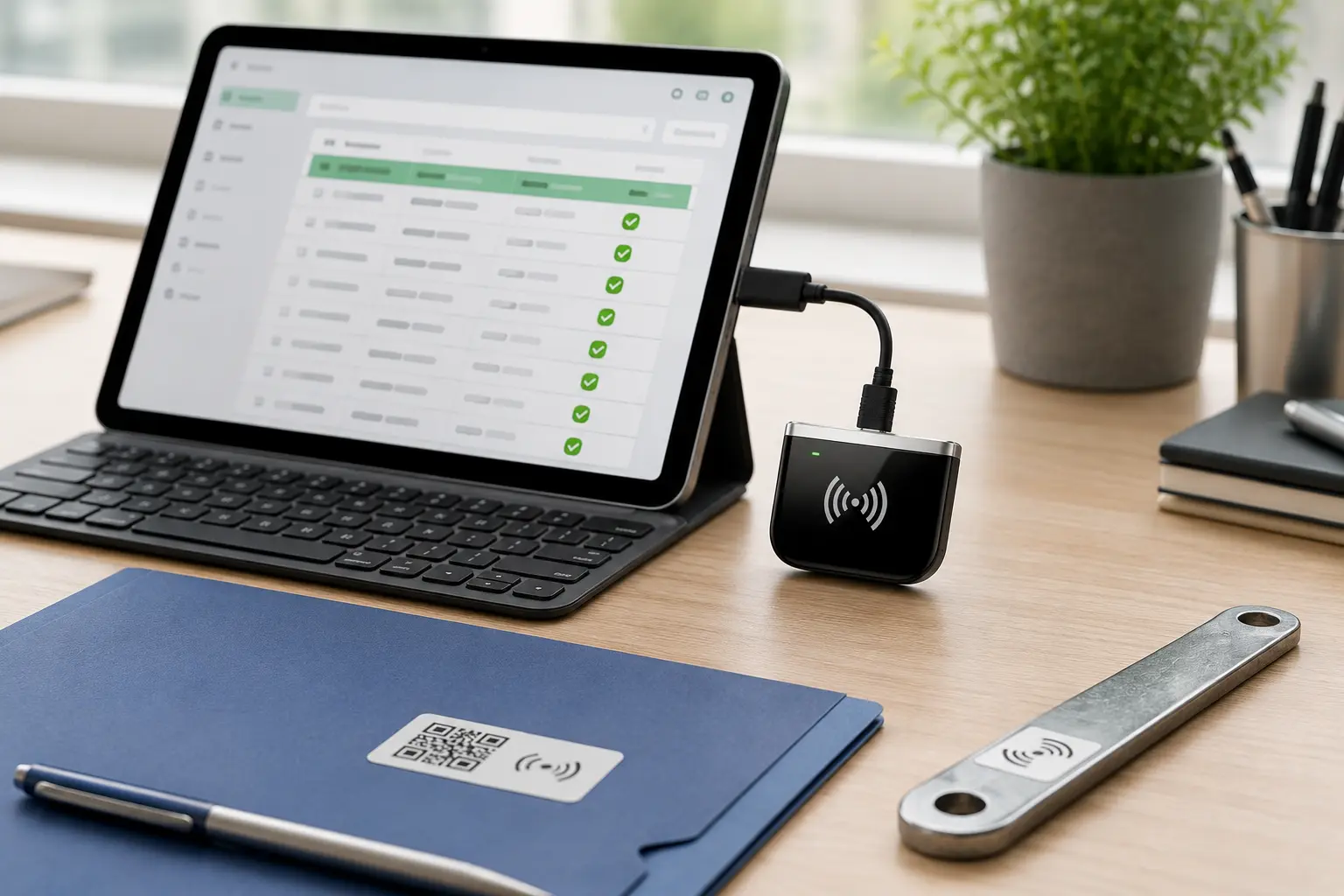

Inspect and filter tag data
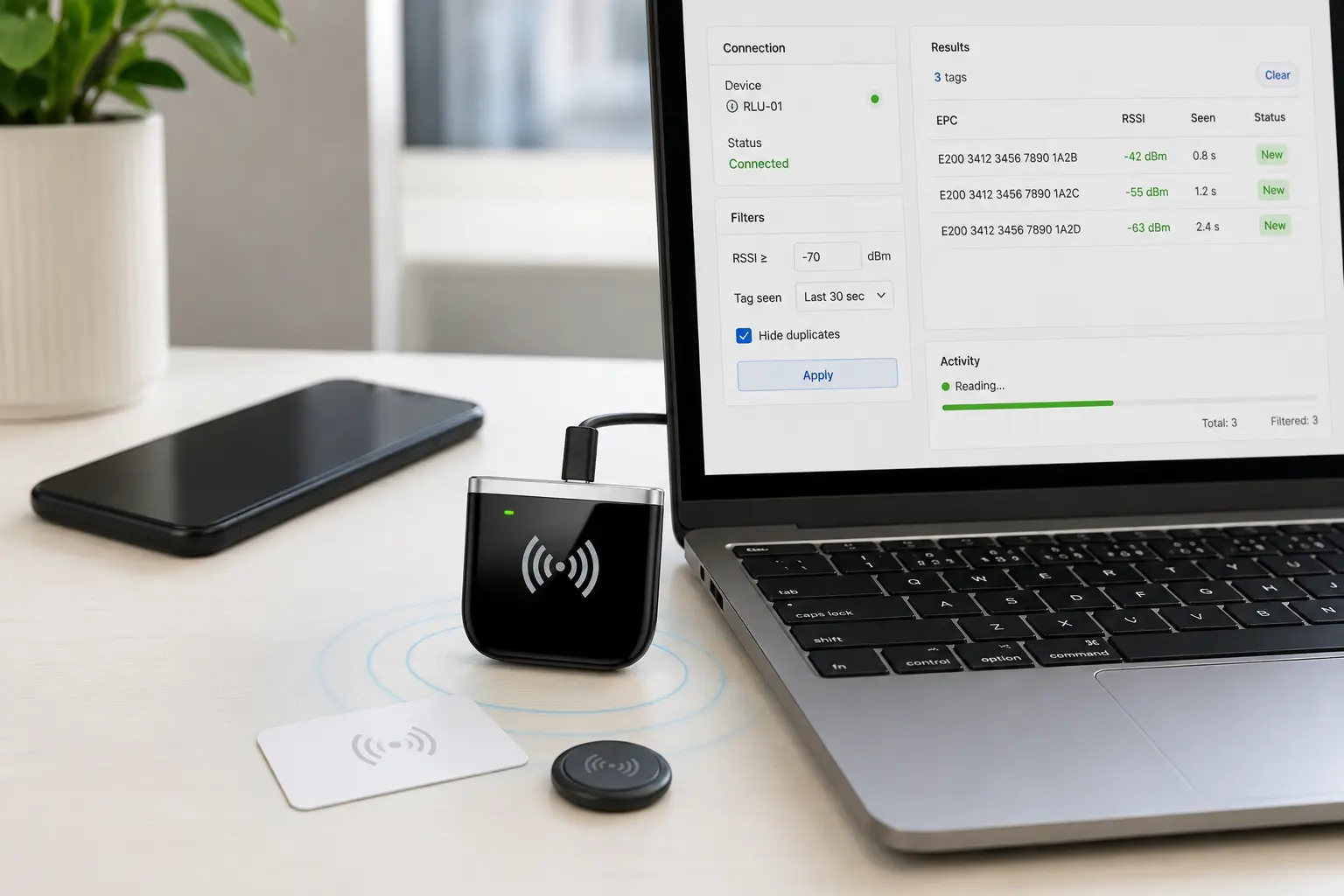
Use RSSI information and custom tag-data filtering to focus on the records needed by the host application.
Pocket-Sized RFID Integration
Carry UHF RFID verification with the host device already in the workflow
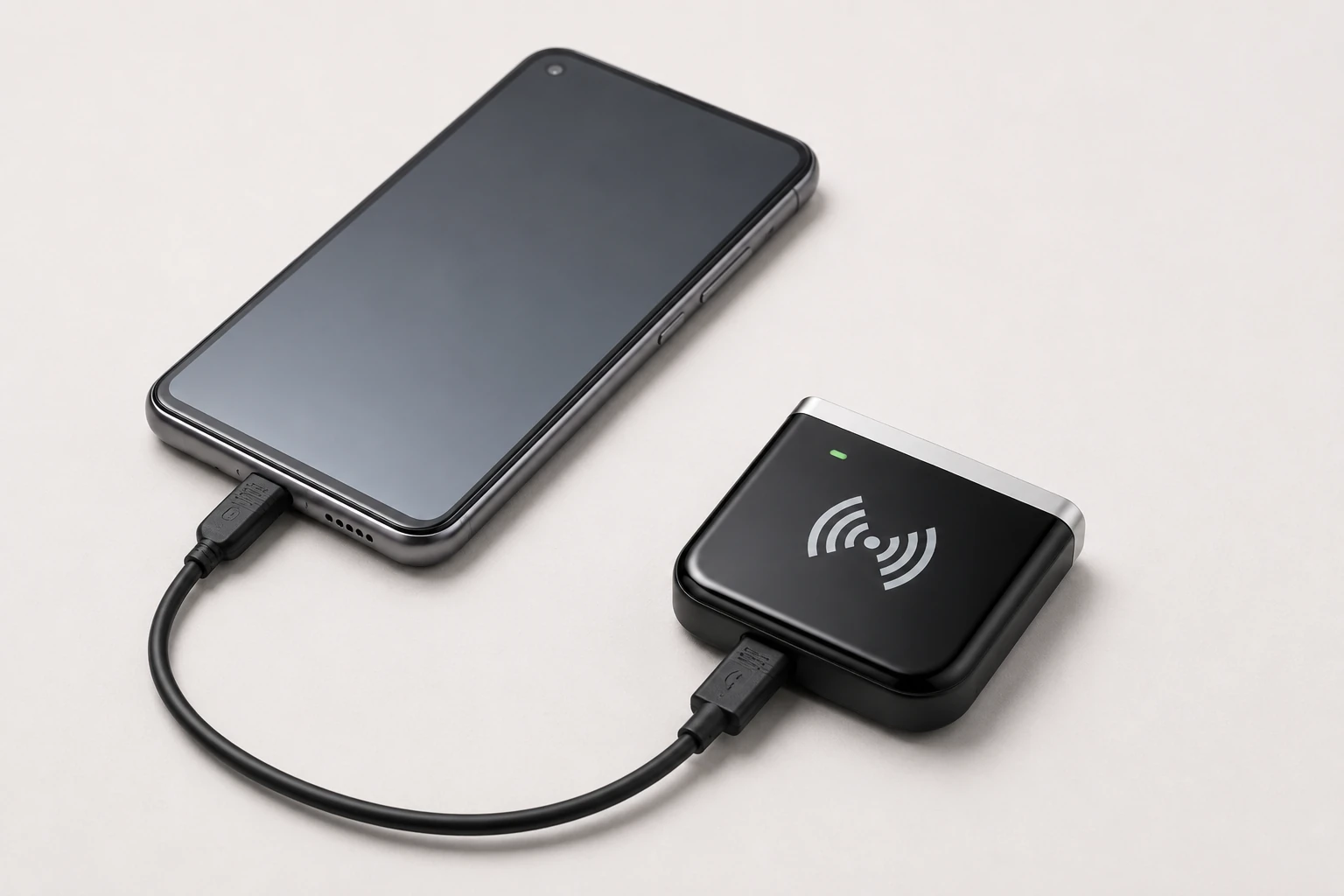
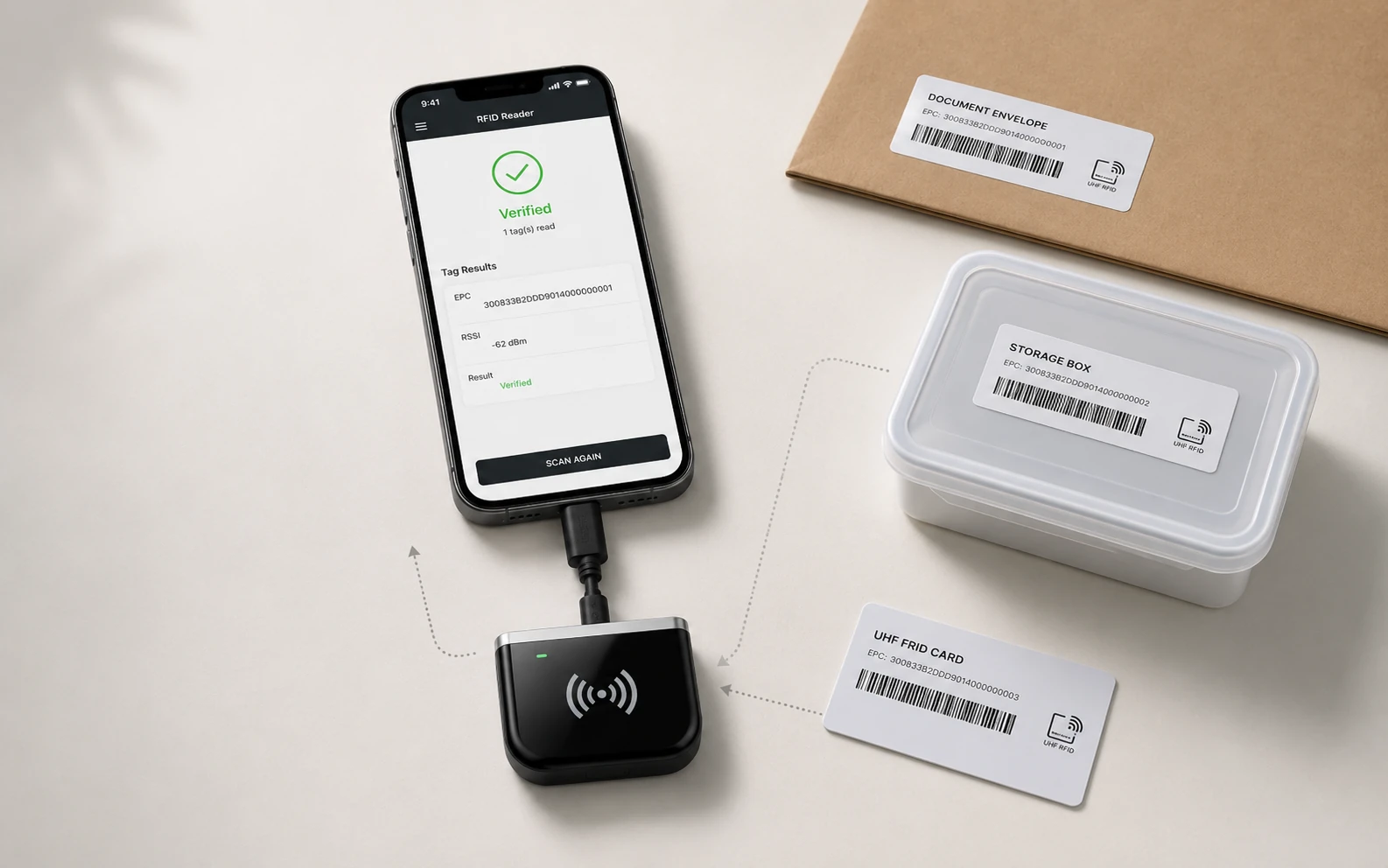
Connect RLU-01 to a compatible phone, tablet, or computer instead of carrying a separate full-size handheld terminal.
The 62.5 × 48.0 × 9.0 mm enclosure, 37 g weight, USB Type-C interface, and OTG support make portability and host integration the central value. Validate software, connector, power, and tag behavior with the target host.
Keep the reader in a field kit, service case, or beside a compact workstation.
Use USB Type-C to power the reader and exchange tag data with the selected host.
Let the mobile or desktop application handle records, decisions, and downstream integration.
Before / After
Move tag verification from a fixed desk to the host device already in use
Compare a workstation-bound tag check with a portable USB workflow connected directly to a compatible mobile host.
Desktop-bound verification
Five setup actions before verification
The tag check remains tied to a fixed verification position and the workstation available there.
Portable USB verification
Three steps with the host device
Confirm host compatibility, regional frequency, target tags, working position, and application behavior before deployment.
USB-Powered RFID Operation
Add UHF capability without adding a separate power system
RLU-01 draws power through USB Type-C and is specified at 1.2 W with +18 dBm output.
This supports compact mobile and desktop integration where size, cable count, and power budget matter. Confirm the host port can supply the required power and that the selected RF configuration meets local regulations.
Attach the reader to a compatible host and confirm OTG, driver, SDK, and power requirements.
Set the permitted frequency behavior and RF output for the target tags and working position.
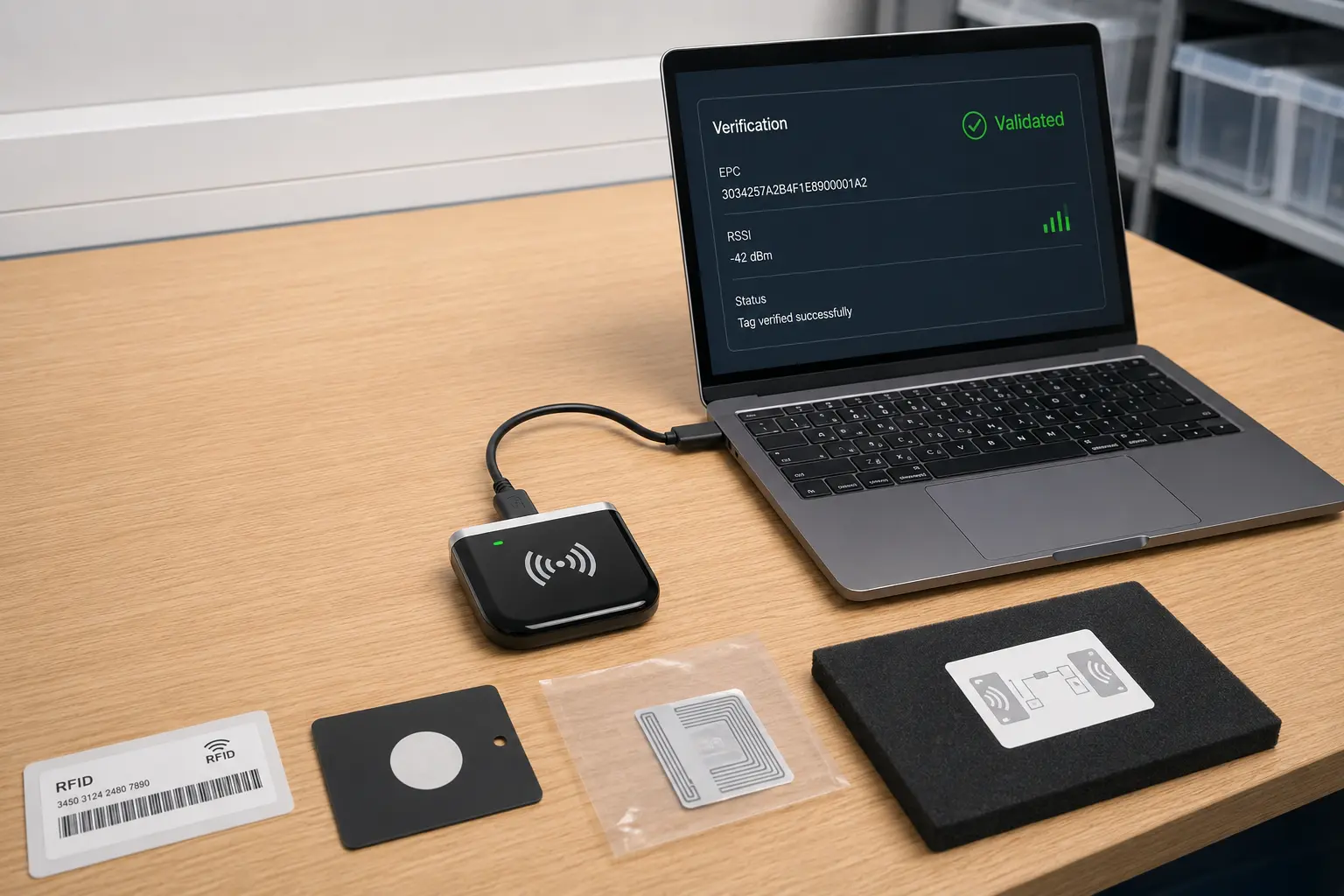
Capture EPC or tag-memory data and use RSSI or filtering when the application needs it.
Supporting Features
RF control, protocol coverage, and targeted data handling
The feature set supports practical integration, targeted tag verification, and cleaner data returned to the host application.
0–18 dBm adjustable output
Set output for the target tag, working position, and local frequency plan.
RSSI and custom filtering
Use signal information and filtering criteria to return the records the host workflow needs.
ISO 18000-6C / 6B
Work with listed UHF protocols; confirm optional and regional standards before ordering.
Type-C standard; Bluetooth optional
Use USB Type-C as the primary interface and specify Bluetooth only when the optional configuration is confirmed.
Applications
Portable UHF verification and compact host-connected workflows
RLU-01 is best suited to targeted tag tasks where portability, USB integration, and host-controlled data matter.
Mobile Tag Validation
Connect to a compatible mobile host to check tag identity, memory, or sensor-tag data during field support and inspection.
Tag Commissioning and Troubleshooting
Use read/write, RSSI, filtering, and adjustable RF settings while testing tags, labels, tagged materials, and application behavior.
Compact Desktop Integration
Add UHF RFID to a small workstation, kiosk, test bench, or service counter without a separate reader enclosure and power adapter.
Specifications
RLU-01 portable USB UHF RFID reader specifications
Values are normalized from the supplied A7 datasheet. Confirm regional frequency, optional Bluetooth, standards configuration, host support, and SDK before publishing.
| Physical | Dimensions | 62.5 × 48.0 × 9.0 mm |
|---|---|---|
| Weight | 37 g | |
| Connectivity | Standard Interface | USB Type-C; supports OTG on compatible hosts |
| Optional Interface | Bluetooth; configuration must be confirmed | |
| RFID | Frequency | 902–928 MHz UHF; confirm deployment region |
| RF Output | 0–18 dBm adjustable | |
| Operation Mode | Fixed frequency or frequency hopping, selectable | |
| Forward Modulation | PR-ASK, DSB-ASK | |
| Decoding | FM0, Miller 2/4/8 | |
| Read Range | Up to 0.3 m; configuration dependent | |
| Write Range | Up to 0.1 m; configuration dependent | |
| Identification Rate | >100 tags/s under stated conditions | |
| Multi-Tag Processing | 100 tags in 3 seconds under stated conditions | |
| Baseband Rate | 40k, 160k, 320k, 400k bps | |
| Power | Supply | USB Type-C, +5.5 V DC |
| Consumption | 1.2 W at +18 dBm output | |
| Environment | Operating Temperature | −20 to +70 °C |
| Storage Temperature | −40 to +85 °C | |
| Humidity | 10%–95% RH, non-condensing | |
| Protocols | Core Standards | ISO 18000-6C / EPC Class 1 Gen 2; ISO 18000-6B |
| Optional / Regional | GB/T 29768-2013 optional; GJB 7377.1 configuration to be confirmed | |
| Sensor Tags | Proprietary temperature and humidity sensor-tag protocols listed |
Support & Documentation
Technical resources for RLU-01 evaluation and integration

Product Datasheet
Review physical, USB, RF, protocol, power, and environmental specifications.
Request datasheet →
USB and SDK Integration Guide
Confirm Type-C pinout, OTG behavior, drivers, commands, data format, read/write functions, filtering, and target-host support.
Request integration resources →Engineering Review
Discuss the host device, operating system, USB power, target tags, working position, memory operations, and regional RF configuration.
Ask an engineer →FAQ
RLU-01 USB RFID reader FAQ
What is RLU-01 designed for?
RLU-01 is a portable USB UHF RFID reader for tag verification, commissioning, troubleshooting, and compact workstation integration alongside a compatible host device.
Why choose a portable USB RFID reader?
A compact USB reader can add UHF tag functions to the phone, tablet, or computer already used in the task. Confirm OTG, driver, SDK, connector, and power compatibility with the target host.
Does RLU-01 require a separate power adapter?
The supplied specification lists USB Type-C power at +5.5 V DC and 1.2 W consumption at +18 dBm output. Confirm the host port can supply the required power.
What is the stated read distance?
The datasheet lists up to 0.3 m read and up to 0.1 m write distance, depending on configuration. Validate the target tag, material, orientation, RF setting, and working position.
Can RLU-01 read and write UHF tags?
Yes. The supplied specification includes read and write operation for listed ISO 18000-6C/6B tags. Confirm the tag memory bank, access settings, data format, and host software before integration.
Can it filter tag data?
Yes. The datasheet lists custom tag-data filtering and RSSI information. Define which EPC, memory, or signal criteria the host application needs, then validate the returned records.
Project Review
Confirm RLU-01 for your portable USB RFID integration
Share the host device and operating system, OTG or USB requirements, target tags, required read/write operation, working position, regional frequency, filtering needs, and SDK expectations.